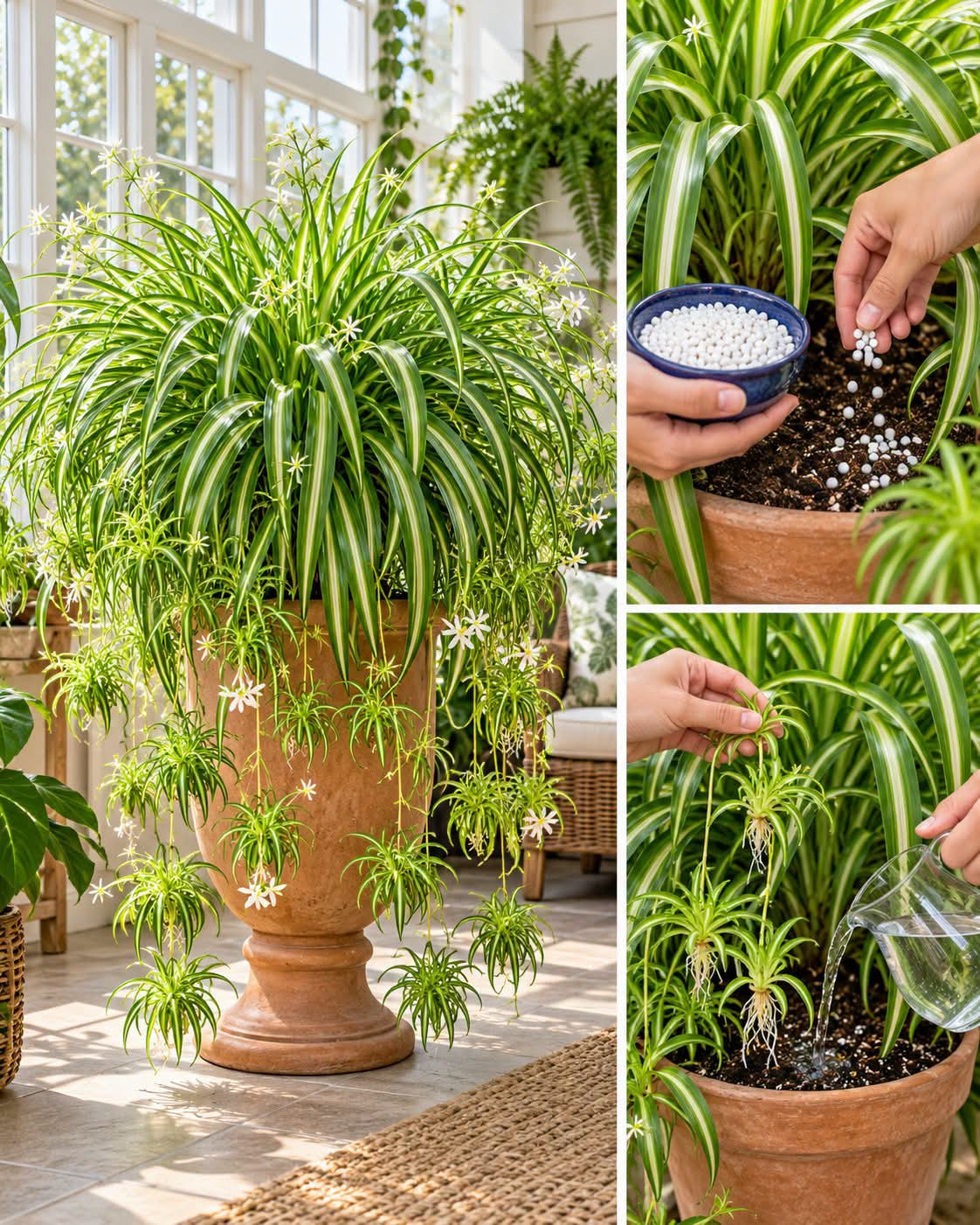
The Spider Plant (Chlorophytum comosum) is one of the most popular, adaptable, and air-purifying indoor plants. Renowned for its arching green-and-white variegated leaves, delicate star-shaped white flowers, and cascading plantlets (“spiderettes”), this tropical perennial is ideal for both beginner and experienced plant enthusiasts.
🌺 1. Seasonal Feeding & Care Schedule
| Season / Phase | Fertilizer Type | Frequency | Primary Objective |
|---|---|---|---|
| 🌱 Spring & Summer | Balanced Granular (10-10-10) or Liquid Fertilizer | Every 2 to 4 weeks | Promotes lush foliage & offshoot production. |
| 🍂 Early Autumn | Diluted Liquid Fertilizer (Half Strength) | Once monthly | Prepares plant for cooler rest period. |
| ❄️ Winter | No Fertilizer (Water Only) | Every 2 to 3 weeks | Prevents fertilizer burn during dormancy. |
🌿 2. Step-by-Step Application & Propagation
🟢 Step 1: Applying Granular Fertilizer
- Sprinkle a small pinch of slow-release fertilizer granules evenly across the surface of the potting soil.
- Avoid clustering granules directly against the base stems to prevent fertilizer burn.
🔴 Step 2: Watering Protocol
- Irrigate thoroughly immediately after applying fertilizer until water drains from the bottom holes.
- Allow the top 50% of the soil to dry out between waterings. Use distilled or filtered water to prevent leaf tip browning caused by fluoride and chlorine.
⚪ Step 3: Propagating “Spiderettes”
- Gently snip baby plantlets from the cascading runners once they develop small aerial root nubs.
- Plant the babies directly into fresh, moist potting mix or root them in water before potting.
💡 Expert Care Tips
Master Gardener Tip:
Spider plants thrive in bright, indirect sunlight. Direct sunlight can scorch the delicate foliage, while too little light will reduce variegation and stop the plant from producing offsets.