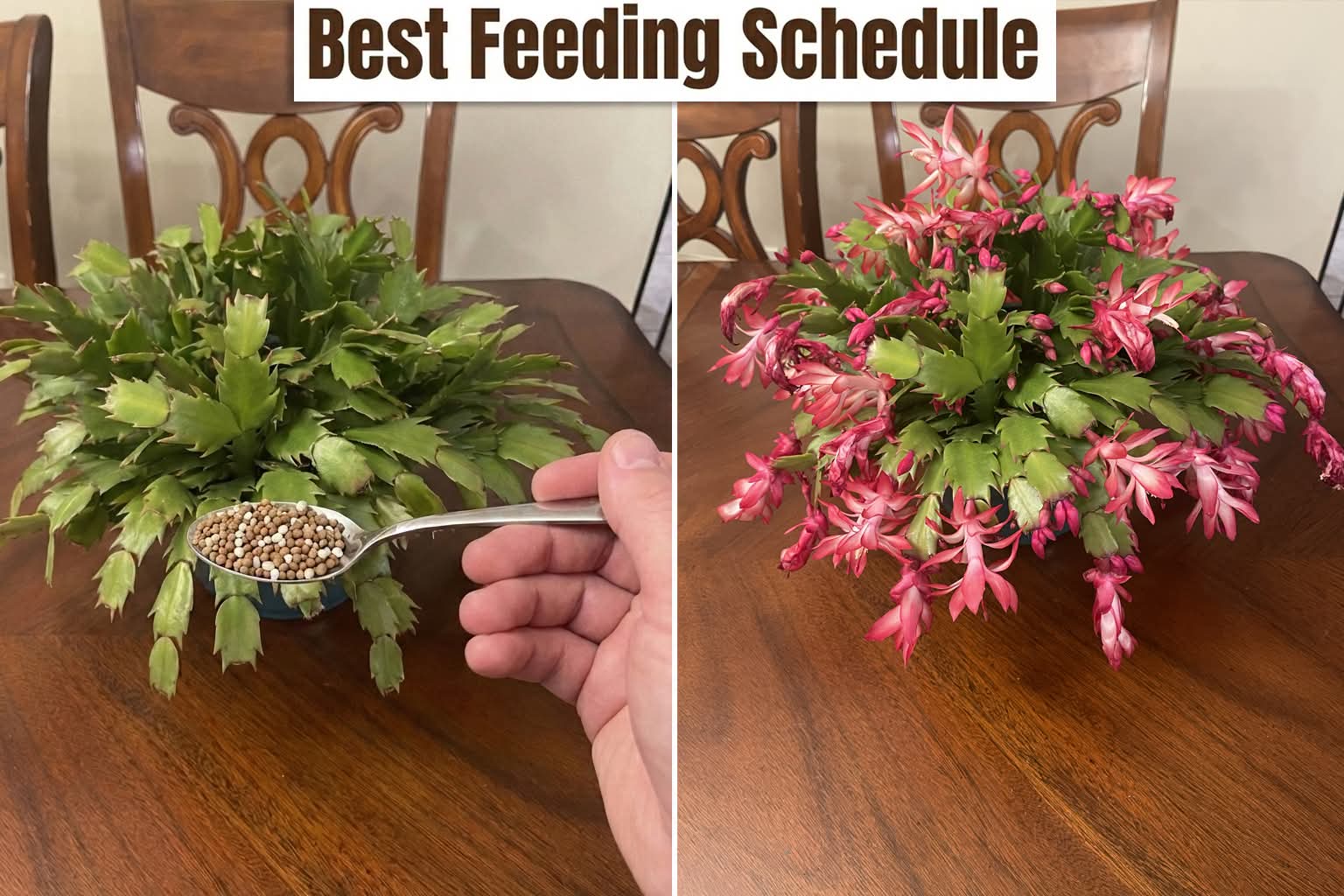
Holiday cacti, comprising Thanksgiving Cactus (Schlumbergera truncata) and Christmas Cactus (Schlumbergera x buckleyi), are among the most beloved indoor plants. Known for their brilliant, cascading blossoms in shades of pink, red, magenta, and white, these tropical epiphytes can live for decades and bloom abundantly year after year when provided with a proper fertilization and care schedule.
This comprehensive guide covers everything you need to know about fertilizing, watering, lighting, and managing seasonal dormancy to ensure maximum flower production.
I. Understanding Holiday Cacti Nutrition
Unlike desert cacti, holiday cacti originate from the humid coastal rainforests of Brazil, where they grow naturally on tree branches and in rock crevices. They require regular moisture, organic nutrients, and balanced mineral supplementation to produce healthy green stem segments (cladodes) and dense flower clusters.
Key Nutritional Elements:
- Nitrogen (N): Promotes strong, vibrant green stem growth during the spring and summer active growth phase.
- Phosphorus (P): Critical for root development and triggering heavy flower bud formation in early fall.
- Potassium (K): Enhances plant resilience, overall cell strength, and flower longevity.
- Magnesium & Sulfur: Essential micronutrients that build chlorophyll, preventing purple or yellow stem discoloration and reinforcing flower stem strength.
II. Seasonal Feeding Schedule & Fertilizer Application
To transform a green, foliage-heavy plant into a blooming masterpiece, you must adapt your fertilization strategy according to the natural biological cycles of the plant.
1. Spring & Summer: The Active Growth Phase (April – August)
During warmer months, the plant builds new foliage and expands its root network.
- Fertilizer Choice: Use a balanced slow-release granular fertilizer (such as 10-10-10 or 14-14-14) applied to the soil surface, or a water-soluble 20-20-20 liquid fertilizer diluted to half strength.
- Application Method: Measure a small spoon of slow-release granules (approximately 1 tablespoon for medium-to-large pots) and distribute evenly across the topsoil, then water thoroughly.
- Magnesium Supplement: Supplement once a month with diluted Epsom salt (1 tablespoon per 1 gallon of water) to boost chlorophyll production.
2. Early Autumn: The Pre-Bloom & Bud Induction Phase (September – October)
To encourage the formation of hundreds of tiny flower buds at the tips of stem segments:
- Reduce Nitrogen: Switch to a high-phosphorus bloom booster (such as 10-30-10) or cease heavy nitrogen fertilization entirely by late September.
- Cool Temperatures & Dark Cycles: Provide 12 to 14 hours of continuous, uninterrupted darkness each night along with cool evening temperatures (around 12°C–15°C or 55°F–60°F) for 6 consecutive weeks.
3. Late Autumn & Winter: The Flowering Phase (November – January)
Once flower buds appear and swell:
- Stop All Fertilizing: Do not apply fertilizer while the plant is in full bloom or setting buds. Feeding during flowering can cause the plant to drop its buds prematurely.
- Maintain Consistent Moisture: Water lightly when the top inch of soil feels dry.
4. Late Winter: Post-Bloom Rest Phase (February – March)
After blooming finishes, the plant enters a brief 4-to-6-week resting period.
- Reduce watering slightly and allow the soil to rest before resuming the spring feeding routine.
III. General Environmental & Care Requirements
While proper feeding is essential, optimal light, watering, and potting practices ensure maximum fertilizer uptake.
1. Sunlight & Exposure
- Place in bright, indirect light near an east-facing or shaded south/west window.
- Avoid direct mid-day sun, which scorches the flattened stem segments and turns them reddish-purple.
2. Watering Protocol
- Soil Check: Water thoroughly whenever the top 1 to 2 inches of soil feel dry to the touch.
- Drainage: Always ensure pots have functioning bottom drainage holes. Never leave the pot standing in runoff water, as soggy roots lead to root rot.
3. Soil & Potting Selection
- Use an airy, fast-draining potting mixture composed of 60% standard potting soil, 20% perlite, and 20% coarse orchid bark.
- Holiday cacti prefer being slightly pot-bound; re-pot only once every 3 to 4 years.
IV. Troubleshooting Common Feeding & Care Issues
- Bud Drop: Caused by sudden temperature changes, drafty doors/vents, over-watering, or applying fertilizer while buds are forming.
- Reddish / Purple Stems: Indicates excess direct sunlight or a magnesium/nitrogen deficiency. Treat with a monthly Epsom salt drench and move to filtered light.
- Limp, Wrinkled Leaves: Usually signals severe underwatering or damaged roots from overwatering. Check root health before applying any fertilizer.