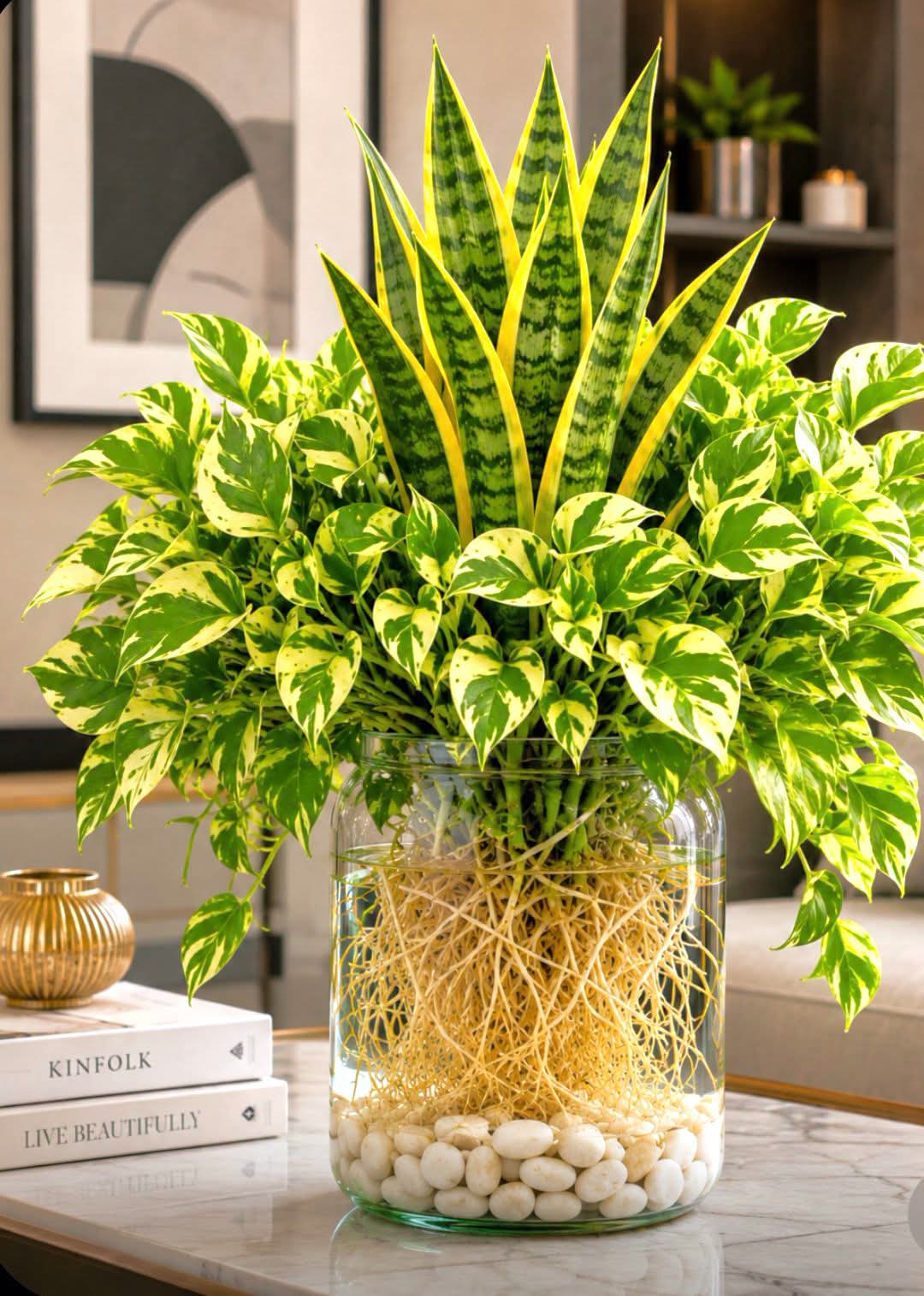
Cultivating a striking dual-plant hydroponic arrangement featuring vertical, variegated Snake Plant blades (Dracaena trifasciata / Sansevieria) surrounded by a lush, cascading canopy of variegated Golden Pothos (Epipremnum aureum) brings modern luxury, vibrant green aesthetics, and natural air purification directly into your living room 🏠🌿. Displayed inside a clear cylindrical glass vase filled with clean water, a base layer of smooth white river pebbles, and an intricate network of healthy beige water roots on a stylish coffee table, water-based plant arrangements transform indoor spaces into breathtaking botanical exhibits 🪴✨.
While many houseplant enthusiasts believe that soil-free liquid cultivation is temporary or difficult, combining complementary species into hydroponic glass planters provides continuous root visibility, eliminates soil-borne pests, and simplifies watering routines 🔬🌱. Combining structural upright succulents with trailing vines anchored securely by white pebbles guarantees stable growth, vibrant foliage variegation, and crystal-clear water conditions 🧪⚠️.
In this ultimate hydroponic plant styling and care guide, we will explore the botanical science behind aquatic root adaptation, compare top water-cultivation methods side-by-side, detail step-by-step assembly instructions, and share essential long-term maintenance secrets for keeping your glass-planter arrangements thriving year-round 📝👇🛡️!
🌿 The Botanical Science Behind Soil-Free Hydroponic Growth 🧪✨
Growing Snake Plants and Pothos vines together in water relies on aquatic root morphology, capillary nutrient transport, and beneficial symbiotic root interaction 🔬🧬.
Core Botanical Factors for Hydroponic Glass Arrangements:
- Development of Aquatic Water Roots 💧: When transferred from soil to pure water, plants shed rigid terrestrial roots and sprout specialized white, flexible aquatic roots equipped with thin outer membranes designed for efficient dissolved oxygen absorption.
- Symbiotic Auxin Hormonal Boost 🧬: Pothos cuttings naturally produce high concentrations of indole-3-acetic acid (a natural rooting hormone) into the water, which stimulates faster root initiation and rhizome health in adjacent Snake Plant bases.
- Pebble Substrate Anchorage & Stability 🪨: A bottom layer of smooth white river pebbles stabilizes tall, heavy Snake Plant leaves, keeps root bases elevated above sediment, and creates an attractive architectural foundation.
- Enhanced Air Purification & Transpiration ✨: Soil-free hydroponic plants release clean moisture into indoor air via natural leaf transpiration without harboring mold spores, dust mites, or fungal pathogens.
📊 Comprehensive Comparison: Popular Hydroponic & Water Cultivation Methods
To help you choose the ideal water-based setup for your potted indoor plants, compare these popular hydroponic styling routines side-by-side 📋👇:
| Cultivation Method / Setup 🛡️ | Primary Tools & Glass Base 🎯 | Main Botanical Advantage ✨ | Maintenance Schedule 🗓️ |
|---|---|---|---|
| Pebble-Anchored Mixed Vase 🏺 | Cylindrical Glass Jar & River Pebbles | Max structural support & natural hormone sharing 🛡️ | Change water every 2 to 3 weeks ⏱️ |
| Single-Stem Hydroponic Flask 🧪 | Narrow Neck Glass Propagation Flask | Ideal for single cuttings & quick root formation ✨ | Refill water level weekly 🗓️ |
| Floating Surface Cork Planter 🪵 | Glass Bowl & Perforated Cork Ring | Keeps leaf bases completely dry above waterline 🌿 | Inspect water clarity every 10 days ⏱️ |
| Liquid Bio-Nutrient Reservoir 💧 | Clear Glass Vase & Liquid Hydro-Feed | Supplies trace minerals (N-P-K) for fast growth 🪴 | Add liquid drops once per month ⏱️ |
🛡️ Key Benefits of Soil-Free Glass Hydroponics 🌿✨
1. 100% Soil-Pest Free & Clean Home Environment 🛡️✨
Completely eliminates fungus gnats, soil mold, potting mess, and root parasites! Water-based glass planters keep your indoor air clean and your counters spotless.
2. Complete Root Health & Water Visibility ✨
Allows instant, clear inspection of root development through transparent glass walls, making it effortless to identify healthy growth or adjust liquid levels.
3. Eye-Catching Centerpiece for Modern Interiors 🏠🪙
Combines tall architectural sword leaves with cascading variegated vines, creating a luxurious botanical accent for coffee tables, desks, and shelves.
4. Eco-Friendly, Reusable & Low Maintenance 🪴✨
Eliminates frequent repotting into expensive soil mixes! Simply rinse pebbles, replace water periodically, and enjoy effortless, long-lasting greenery.
📝 Step-by-Step Guide: How to Assemble a Hydroponic Glass Arrangement 🏺🧪
Pro-Tip: Always use distilled, rain, or filtered water to assemble your arrangement, as chlorine and heavy minerals in tap water can cloud glass walls and stain white roots!
1. Prepare & Clean Plant Roots Thoroughly ✂️🧽
- Remove healthy Snake Plant stalks and variegated Pothos vines gently from their potted soil.
- Submerge roots in a bucket of lukewarm water, gently massaging away all dirt particles until roots are completely bare and clean.
- Trim off any dark, mushy, or damaged root tips using alcohol-sterilized scissors.
2. Sterilize Glass Vase & White Pebbles 🏺🪨
- Wash a tall, heavy-bottomed cylindrical glass vase with warm soapy water and dry thoroughly.
- Rinse smooth white river pebbles several times in clean water to flush away fine stone dust.
- Layer 2\text{ to }3\text{ inches} (5\text{ to }7.5\text{ cm}) of clean white pebbles across the bottom of the glass vase.
3. Position Plants & Fill with Water 🌿💧
- Stand the tall Snake Plant base centrally on the pebble bed.
- Surround the Snake Plant with variegated Pothos stem bases, allowing vine stems to drape gracefully over the glass rim.
- Add extra white pebbles gently around stem bases to anchor plants firmly in an upright position.
- Pour room-temperature filtered water into the vase until it covers the roots completely, keeping the water level just below the lowest leaf joints.
4. Place in Ideal Bright Indirect Light ☀️🪴
- Position your glass arrangement in a well-lit spot receiving bright, indirect sunlight (18^\circ\text{C} to 26^\circ\text{C}).
- Keep away from cold air conditioning blasts, heating vents, or harsh direct midday sun that causes algae growth!
🗓️ Essential Rules for Hydroponic Water Care 💡🛡️
Following proper water changes, container cleaning, and light placement rules guarantees long-term arrangement success 🌟:
- Change Water Periodically 🚫: Replace stagnant vase water every 2 to 3 weeks with fresh filtered water to replenish dissolved oxygen levels and prevent cloudiness.
- Control Algae Buildup 🧼: If green algae appears on glass walls or white pebbles, remove plants, wash vase and pebbles with warm water, and refill with fresh water.
- Add Hydroponic Nutrients Sparingly 💧: Add 1\text{ or }2\text{ drops} of liquid hydroponic fertilizer to the water once per month during spring and summer to fuel vibrant leaf color.
- Wipe Leaf Blades Monthly 🧽: Dust variegated Pothos and Snake Plant leaves gently with a damp soft cloth to preserve maximum shine, maximize photosynthesis, and clear stomata!
🌟 Final Thoughts
Cultivating a Snake Plant and Pothos hydroponic arrangement in a clear glass vase anchored by white pebbles is a modern, stylish, and remarkably easy secret for enjoying indoor greenery 🌿🏺✨. By mastering simple soil-free assembly, maintaining clean filtered water, and providing bright indirect light, you guarantee long-lasting botanical luxury that elevates your home decor 🏠🛡️. Try this easy hydroponic styling secret today and create your own water garden! 🚀