Every passionate plant parent dreams of lush green leaves and vibrant, head-turning flowers indoors! 🌿 With synthetic fertilizers occasionally causing chemical root burns or salt buildups, more plant enthusiasts are turning to organic kitchen-waste solutions. Among the most potent and eco-friendly hacks is homemade carrot liquid fertilizer and pulp compost. 🥕⚡
Carrots are packed with essential vitamins, minerals, and micro-nutrients that promote strong root structure, enhance chlorophyll production, and stimulate continuous blooming in indoor flora like Anthuriums and Peace Lilies. 🌺✨ Below is a detailed, comprehensive guide explaining how to prepare, apply, and maximize this natural plant tonic!
📸 Decoding the Process: From Kitchen Blend to Blooming Beauty
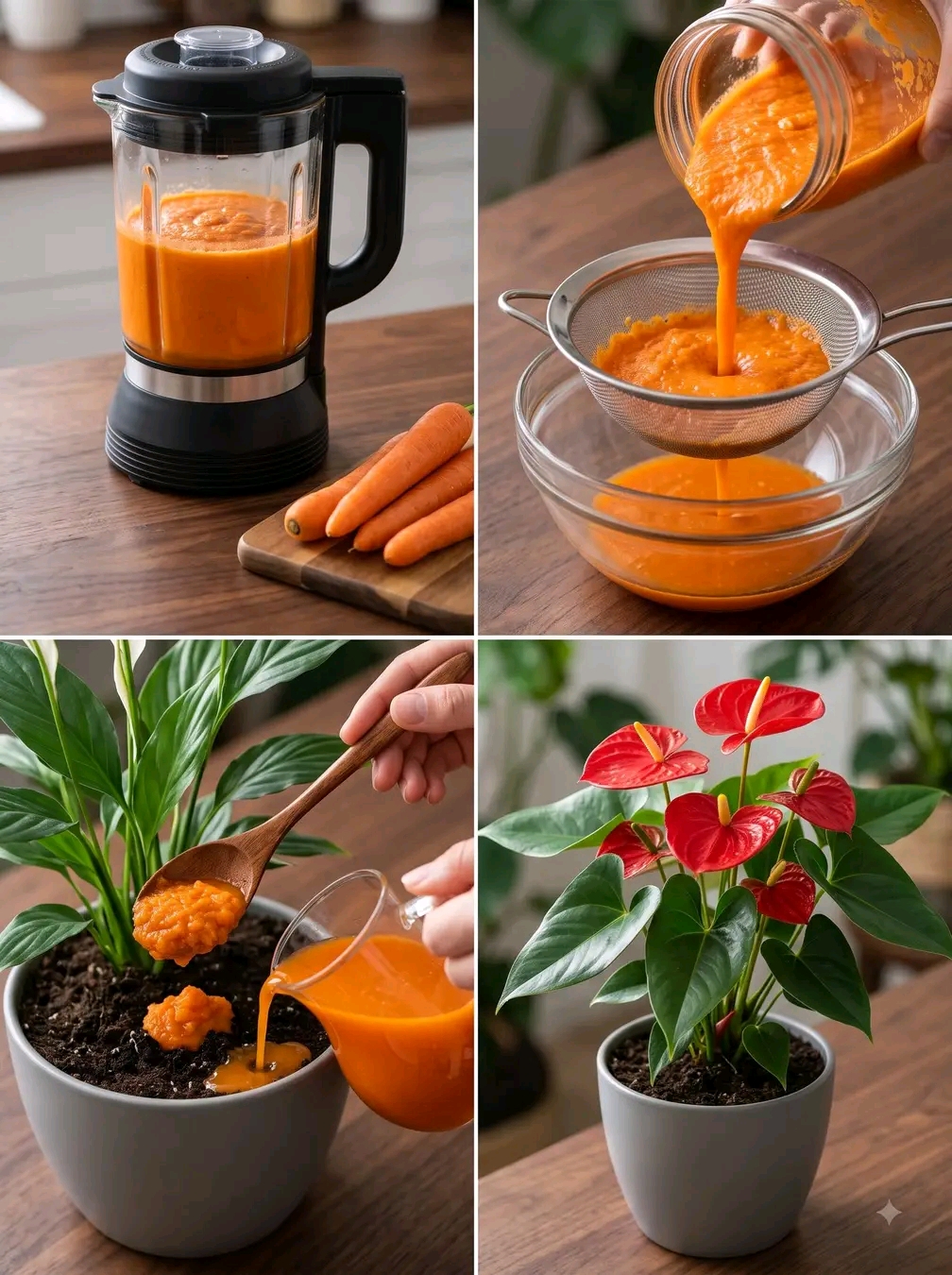
The step-by-step visual sequence highlights a simple zero-waste method to feed your indoor jungle using whole fresh carrots or carrot scraps:
- Blending & Extraction (Top Left): Fresh carrots are cut into pieces and blended with filtered water in a high-speed kitchen blender until smooth. This breaks down cellular walls, releasing bio-available potassium, beta-carotene, and natural carbohydrates. 🌪️
- Filtration & Separation (Top Right): The vibrant orange puree is poured through a fine mesh strainer into a glass bowl. This process separates the nutrient-rich liquid juice from the thick fibrous pulp. 🫗
- Targeted Application (Bottom Left): The grower applies both components directly to potted soil—spooning the fibrous pulp as a soil amendment and pouring the strained liquid as a quick-absorbing root drench. 🥄💧
- Vibrant Results (Bottom Right): The result is a thriving Anthurium plant loaded with glossy foliage and bright red, long-lasting blooms! 🌺🛡️
📊 Comparison: Homemade Carrot Water vs. Commercial Chemical Fertilizer
Understanding how organic vegetable extractions stack up against synthetic options helps you tailor your plant care routine safely and effectively! 🛠️🌱
| Feature / Metric | Homemade Carrot Fertilizer 🥕✨ | Commercial Synthetic Fertilizer 🧪🧫 |
|---|---|---|
| Primary Nutrient Focus | Potassium (K), Beta-carotene, Trace Minerals | Nitrogen, Phosphorus, Potassium (N-P-K) |
| Root Burn Danger | Almost Zero (Gentle, slow-release) 🛡️ | High (Risk of nitrogen/salt scorching) 🔥 |
| Soil Microbiome Impact | Feeds beneficial soil bacteria & fungi 🦠 | Can reduce soil bio-activity over time 🛑 |
| Cost & Accessibility | Virtually free (uses kitchen scraps) 💰 | Requires purchasing specialized products 💵 |
| Preparation Effort | Requires blending & straining 🧑🍳 | Ready-to-use after dilution ⏱️ |
| Eco-Friendliness | 100% Biodegradable & Zero Waste ♻️ | Chemical |
🛠️ Step-by-Step Guide: How to Make & Apply Carrot Fertilizer
Step 1: Prep Your Ingredients 🥕🔪
Gather 2 to 3 whole carrots or fresh kitchen vegetable scraps (carrot peels and tops work exceptionally well!). Chop them into small chunks to avoid jamming your blender blades. Wash thoroughly to remove any pesticides or dirt.
Step 2: Blend with Water 🌪️💧
Place the chopped carrots into a blender and add 3 to 4 cups of room-temperature filtered water. Blend on high speed for 60 to 90 seconds until you achieve a smooth, uniform liquid consistency. Using room-temperature water ensures delicate plant roots aren’t shocked by ice-cold liquids!
Step 3: Strain the Puree 🫗🥣
Pour the blended mixture through a fine wire-mesh sieve or cheesecloth into a clean glass bowl or pitcher. Press down on the pulp with a spoon to extract every drop of nutrient-rich orange liquid.
💡 Pro-Tip: Keep the liquid and solid pulp separate! Both serve unique, powerful functions for your potting soil.
Step 4: Applying Liquid Drench & Pulp 🥄🪴
- The Liquid Drench: Pour the strained carrot liquid directly onto the soil surface around the perimeter of the pot. The plant’s root system will quickly absorb the dissolved nutrients, stimulating foliage synthesis and flower growth. 🌺
- The Pulp Amendment: Work 1 to 2 tablespoons of the leftover fibrous pulp into the top layer of soil. The fiber slowly breaks down, improving soil aeration, moisture retention, and feeding beneficial micro-organisms. 🦠🌱
🛡️ Key Plant Benefits & Nutritional Value
Carrot liquid fertilizer acts as a holistic health booster for potted houseplants:
- High Potassium (K) Content: Potassium is vital for water regulation, root strength, and flower spike initiation. It is particularly beneficial for blooming plants like Anthuriums, Peace Lilies, and Orchids! 🌺✨
- Micro-Nutrient Shield: Packed with calcium, magnesium, and trace iron, carrot extract helps prevent yellowing leaves (chlorosis) and boosts plant immunity against common pests. 🛡️
- Soil Microbe Feast: Natural plant sugars feed healthy soil bacteria, creating a thriving root ecosystem that improves nutrient uptake. 🌾
💚 Maintenance & Application Rules
- Frequency: Apply carrot liquid fertilizer once every 3 to 4 weeks during the active spring and summer growing seasons. 🗓️
- Storage Warning: Use the fresh liquid immediately after preparation! Because it contains natural organic matter without preservatives, storing it at room temperature for more than 24 hours can cause fermentation and sour odors. 🚫🤢
- Avoid Over-Pulping: Apply only small amounts of pulp to the topsoil and gently mix it in. Leaving a thick, wet layer of pulp on top without mixing can attract fungus gnats or create surface mold. 🦟❌
Transforming basic kitchen ingredients into potent plant food is an easy, rewarding way to keep your indoor garden flourishing. Give your houseplants a dose of fresh carrot power today! 🥕🌿✨