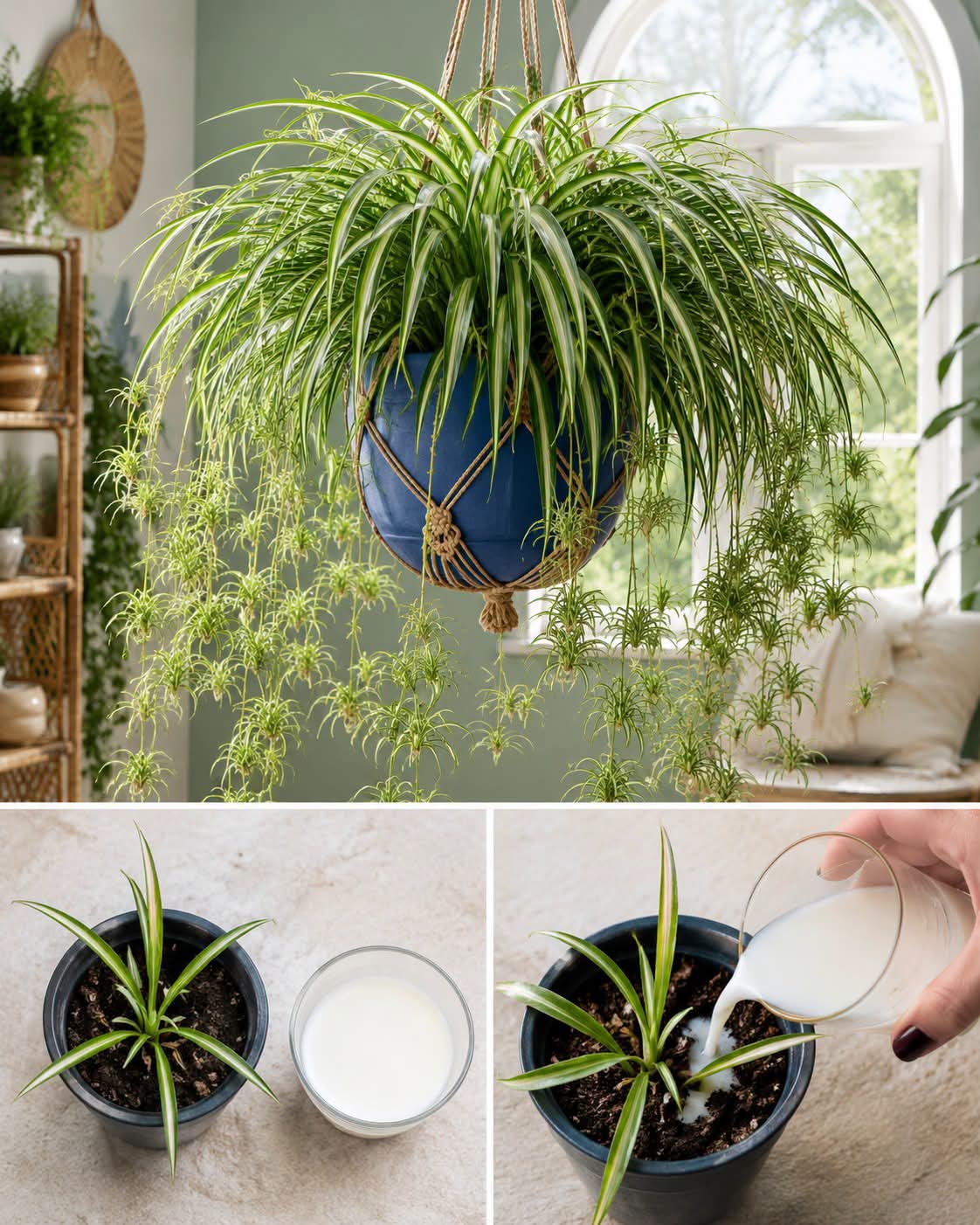
The Spider Plant (Chlorophytum comosum) is a beloved, highly adaptable indoor plant celebrated for its arching variegated foliage, air-purifying capabilities, and proliferation of cascading baby offshoots or “spiderettes”. Native to tropical and southern Africa, it flourishes as a stunning hanging basket specimen or container plant. Supplementing young plantlets with a diluted milk-and-water drench delivers essential calcium, proteins, and beneficial nutrients that reinforce root development and cellular strength.
🌺 1. Complete Care & Feeding Reference Guide
| Care Aspect | Recommendation | Frequency / Details | Primary Benefit |
|---|---|---|---|
| 🥛 Milk-Water Feeding | 1 part Milk : 9 parts Water | Once every 3–4 weeks | Supplies calcium & strengthens cell walls. |
| ☀️ Light Requirements | Bright, indirect sunlight | Year-round | Maintains vivid white-and-green variegation. |
| 💧 Irrigation Protocol | Distilled or filtered water | When top 50% soil dries | Prevents brown leaf tips caused by minerals. |
| ✂️ Offshoot Propagation | Potting baby plantlets | Spring / Summer | Yields new, independent spider plants. |
🌿 2. Step-by-Step Care, Propagation, and Milk Solution Application
🟢 Step 1: Cultivating the Mother Plant in Hanging Baskets
- Position mature spider plants in a hanging basket near bright, filtered window light.
- As the plant matures, it produces long, arching runners lined with delicate white star blossoms and dangling baby plantlets.
🔴 Step 2: Preparing and Applying the Milk-Water Solution
- Mix 1 part skim or whole milk with 9 parts room-temperature water (a 1:9 ratio). Never apply pure milk to potting soil, as it can decompose and create odors.
- Pour the diluted white solution gently around the base of young potted spiderettes to feed soil microbes and supply organic calcium for vigorous root growth.
⚪ Step 3: Propagating Spiderettes
- Sever healthy baby plantlets from the cascading runners once they develop small root nodes at their base.
- Plant the offshoots into small pots filled with a well-draining potting mix, keep the soil lightly moist, and feed monthly with the diluted milk mixture.
💡 Expert Care Tips
Master Gardener Tip:
Spider plants are sensitive to fluoride and chlorine in tap water, which can cause leaf tips to turn brown. Always flush the pot with fresh, distilled water between milk-water feedings to keep the potting medium clean and well-balanced.