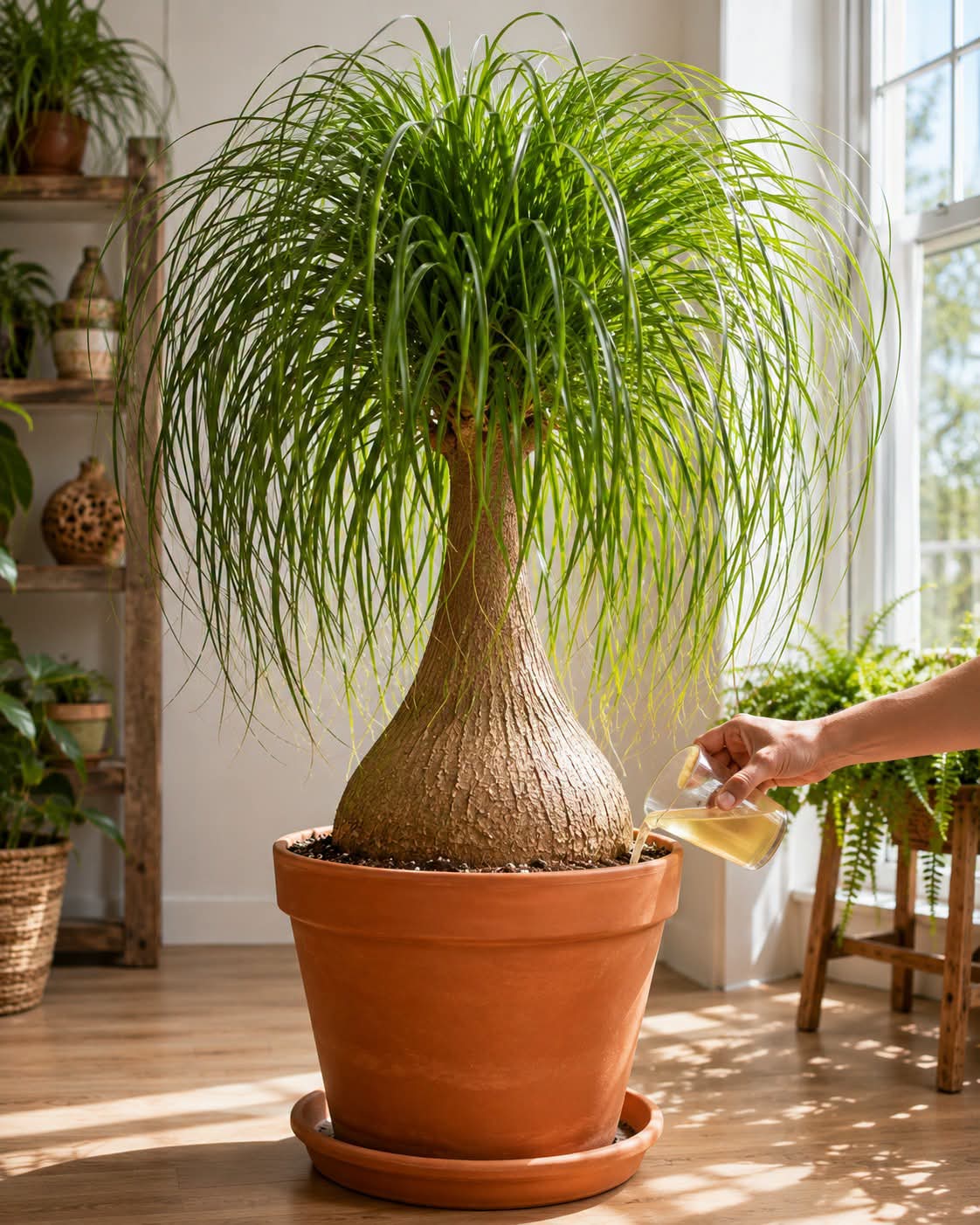
The Ponytail Palm (Beaucarnea recurvata), often recognized by its swollen, bulbous stem base—earning it the nickname “Elephant’s Foot”—is one of the most resilient and eye-catching indoor plants. Despite its common name, it is actually a succulent rather than a true palm. Its thick trunk serves as an intentional water reservoir, making it extremely forgiving for busy plant owners.
I. Core Environmental Requirements
1. Sunlight Exposure:
Ponytail Palms thrive best in bright, indirect light to full sun. Position your potted plant near a bright southern or western window where it receives at least 4 to 6 hours of bright light daily. While it can tolerate medium light conditions, its growth rate will slow significantly.
2. Soil and Potting Selection:
- Soil Type: Use a fast-draining succulent or cactus potting mix. Regular potting soil retains too much moisture and can cause root rot.
- Pot Choice: Terracotta or unglazed clay pots with generous drainage holes are ideal, as they absorb excess soil moisture and allow the root system to breathe.
3. Temperature & Humidity:
Keep the plant in temperatures between 18°C and 27°C (65°F–80°F). Protect it from cold winter drafts or direct blast from air conditioning units, as frost can severely damage its fountain-like leaves.
II. Step-by-Step Watering & Liquid Feeding Technique
Step 1: Inspect Soil Moisture
Before applying water or liquid fertilizer, insert a wooden chopstick or your finger 2 to 3 inches deep into the soil. Ensure the soil is completely dry from top to bottom before watering.
Step 2: Prepare Diluted Liquid Fertilizer
Mix a balanced liquid indoor plant fertilizer (or a specialized succulent liquid feed) at half strength with room-temperature water. Diluting prevents mineral burn on delicate roots.
Step 3: Apply Liquid Feed Near the Base
Slowly pour the liquid solution directly onto the soil around the perimeter of the pot, near the swollen trunk base, avoiding pooling moisture directly on the woody stem.
Step 4: Allow Complete Drainage
Continue watering until liquid flows freely out of the bottom drainage holes into the saucer. Allow the excess water to drain out fully for 15 minutes.
Step 5: Empty Standing Water
Discard all excess runoff water collected in the saucer below. Never allow the clay pot or root zone to sit in standing water, as soggy roots are the leading cause of plant decline.
III. Seasonal Maintenance & Long-Term Care
1. Spring & Summer Active Growth:
Water every 2 to 3 weeks during warmer active growing seasons and apply liquid fertilizer once per month.
2. Autumn & Winter Dormancy:
Reduce watering significantly to once every 4 to 6 weeks during cold months, and stop fertilizing completely until spring returns.
3. Pruning & Foliage Cleaning:
Gently trim off yellow or brown leaf tips at the ends using clean shears. Wipe down the cascading long leaves with a damp cloth periodically to remove dust and maintain optimal photosynthesis.
Master Gardener Tip:
Always remember: when in doubt, underwater your Ponytail Palm! The thick caudex trunk retains moisture for weeks, so it is far better to underwater than to overwater.