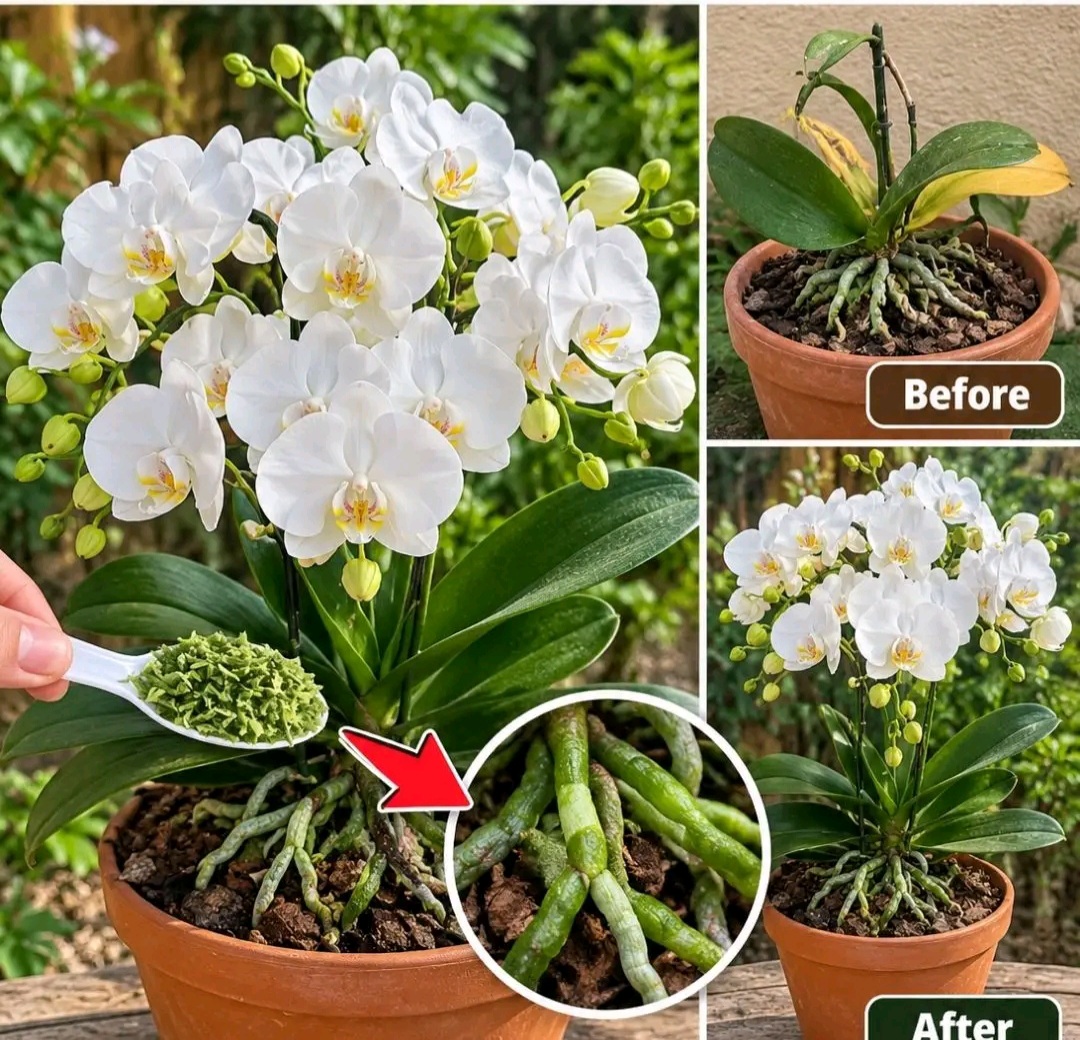
Reviving struggling Moth Orchids (Phalaenopsis) with yellowing leaves, dehydrated roots, and dormant stems into lush plants overflowing with pure white flower canopies brings exotic botanical elegance, continuous blooms, and vibrant life straight into your home living space 🏠🌸. Displayed in classic terracotta pots filled with coarse bark substrate where an indoor plant enthusiast feeds natural organic amendments via a measuring spoon to reveal plump green velamen roots, proper orchid care transforms weak plants into show-stopping floral displays 🪴✨.
While many plant lovers struggle with reluctant orchids that lose their blooms, suffer from root rot, or develop yellowing foliage, supplying simple natural bio-stimulants—such as dried green tea leaf mulch, crushed pine bark extracts, or organic herbal top-dressings—delivers essential nitrogen, antioxidants, and gentle acidity 🔬🌱. Enhancing root zone micro-environments revitalizes firm green aerial roots, fortifies leaf tissue resistance, and stimulates continuous white flower spikes 🧪⚠️.
In this ultimate orchid restoration and care guide, we will explore the botanical science behind reviving weak orchids, compare top indoor orchid care methods side-by-side, detail step-by-step restoration and feeding instructions, and share essential long-term secrets for continuous flowering success 📝👇🛡️!
🌸 The Botanical Science Behind Orchid Root Revitalisation & Flowering 🧪✨
Reviving weak Phalaenopsis orchids with natural organic amendments relies on velamen root hydration mechanics, stem node activation, and balanced mycorrhizal root symbiosis 🔬🧬.
Core Botanical Factors for Explosive Orchid Blooms:
- Velamen Layer Hydration & Root Plumping 🟢: Epiphytic orchid roots are coated in a spongy cellular layer called the velamen. When properly nourished and hydrated, this outer layer absorbs moisture and turn vibrant silvery-green, signaling optimal water storage and nutrient intake.
- Natural Antioxidants & Acidic pH Balance 🍃: Organic green bio-amendments (like green tea leaves or pine bark bio-char) supply mild tannic acids and trace nitrogen. This slightly lowers substrate pH, mimicking natural rainforest canopy bark conditions.
- Photosynthetic Canopy & Spike Initiation ✨: Healthy, thick emerald-green leaves absorb bright indirect light to produce starches needed for bud development, driving new flower stalks to burst with dozens of white blossoms.
- Airy Epiphytic Substrate Aeration 🪨: Orchids naturally grow attached to tree trunks rather than dense soil. Planting in chunky fir bark, charcoal, and coconut husk chunks ensures roots receive continuous air circulation and rapid water drainage.
📊 Comprehensive Comparison: Popular Orchid Revival & Care Methods
To help you choose the best restoration routine for your potted epiphytes, compare these effective natural orchid care techniques side-by-side 📋👇:
| Care Method / Natural Feed 🛡️ | Primary Base & Natural Ingredient 🎯 | Main Botanical Advantage ✨ | Application Schedule 🗓️ |
|---|---|---|---|
| Organic Green Tea Leaf Top-Dress 🍃 | Dried Organic Green Tea / Herbs | Delivers mild nitrogen, antioxidants & optimal acidity 🛡️ | Once per month during growth ⏱️ |
| Soaking Bark Substrate Drench 🏺 | Pure Distilled Water & Bark Soak | Plumps dehydrated velamen layer & flushes mineral salts ✨ | Every 7 to 10 days 🗓️ |
| Diluted Rice Water Hydration 🥛 | Fermented Starchy Rice Extract | Feeds beneficial root microbes & fortifies cell walls 🌿 | Every 3 to 4 weeks seasonally ⏱️ |
| Crushed Cinnamon Root Dusting 🪵 | Ground Organic Cinnamon Powder | Acts as a natural fungicide for pruned root cuts 🪴 | Applied |
🛡️ Key Benefits of Natural Bio-Amendments for Orchids 🌸✨
1. 100% Gentle & Chemical-Free Plant Nutrition 🛡️✨
Prevents toxic fertilizer burn! Chemical fertilizers often scorch delicate epiphytic velamen tissue; natural bio-amendments release mild nutrients slowly and safely.
2. Transforms Yellowing Leaves into Lush Emerald Foliage ✨
Provides trace nitrogen and micronutrients that restore deep green chlorophyll pigment to faded, yellowing, or limp lower leaves.
3. Reinvigorates Dormant Stems for Multiple Flower Spikes 🏠🪙
Stimulates dormant nodes along the main plant stem, causing the orchid to push out fresh green flower spikes packed with dense flower buds.
4. Eco-Friendly & Sustainable Home Care 🪴✨
Repurposes household organic teas and bio-materials into high-performance plant food, making expert orchid restoration accessible and affordable!
📝 Step-by-Step Guide: How to Restore & Feed Weak Orchids 🏺🧪
Pro-Tip: Always inspect orchid roots before feeding; trim away dead, brown, hollow roots using sterilized shears, leaving only firm green or whitish root tissues intact!
1. Prune Dead Roots & Clean Substrate ✂️🪵
- Remove the orchid gently from its container and shake away loose, old bark.
- Using alcohol-sterilized scissors, snip away dried, black, or mushy roots near the stem base.
- Dust open root cuts lightly with ground cinnamon to protect against fungal infections.
2. Repot in Fresh Coarse Bark Mix 🏺🪨
- Place the orchid into a unglazed terracotta pot or clear plastic orchid pot with ample drainage holes.
- Pack chunky fir bark, perlite, and horticultural charcoal loosely around the roots to provide stable anchor points without suffocating root airflow.
3. Apply Natural Organic Top-Dressing 🍃🥄
- Measure 1\text{ spoon} (1\text{ tablespoon}) of dried, chopped organic green tea leaves or organic herbal powder.
- Sprinkle the organic material evenly across the top layer of the bark substrate, keeping it slightly away from the central leaf crown to prevent moisture trapping.
4. Water via Soaking & Place in Bright Light ☀️💧
- Immerse the bottom half of the pot in room-temperature distilled or rain water for 15\text{ minutes}, allowing the bark and roots to absorb moisture fully.
- Lift the pot and allow all excess water to drain out completely.
- Place your orchid near an east-facing or curtained south-facing window receiving bright, indirect sunlight (18^\circ\text{C} to 25^\circ\text{C}).
🗓️ Essential Rules for Long-Term Orchid Blooming 💡🛡️
Following proper moisture checks, temperature drops, and pot drainage rules guarantees continuous flower cascades year-round 🌟:
- Never Allow Water to Sit in the Crown 🚫: Trapped water inside the central leaf crevice causes crown rot, which can kill the plant. Always wipe leaf joints dry!
- Allow Substrate to Dry Between Waterings 💧: Water only when the potting bark feels dry to the touch and aerial roots turn silver-grey.
- Expose to Slight Nighttime Temperature Drops 🌡️: A temperature drop of 5^\circ\text{C} at night during autumn naturally signals orchids to initiate fresh flower spikes.
- Wipe Leaf Surfaces Monthly 🧽: Dust leaves gently with a damp soft cloth to preserve maximum shine, maximize light absorption, and keep stomata clear!
🌟 Final Thoughts
Restoring weak Moth Orchids with natural organic amendments and proper bark aeration is a simple, highly effective, and rewarding care secret for unlocking explosive white blooms 🌸🪨✨. By mastering root pruning, gentle substrate top-dressing, and bright indirect lighting, you guarantee long-lasting botanical luxury that elevates your home decor 🏠🛡️. Try this easy orchid care secret today and watch your plants transform from struggling to spectacular! 🚀