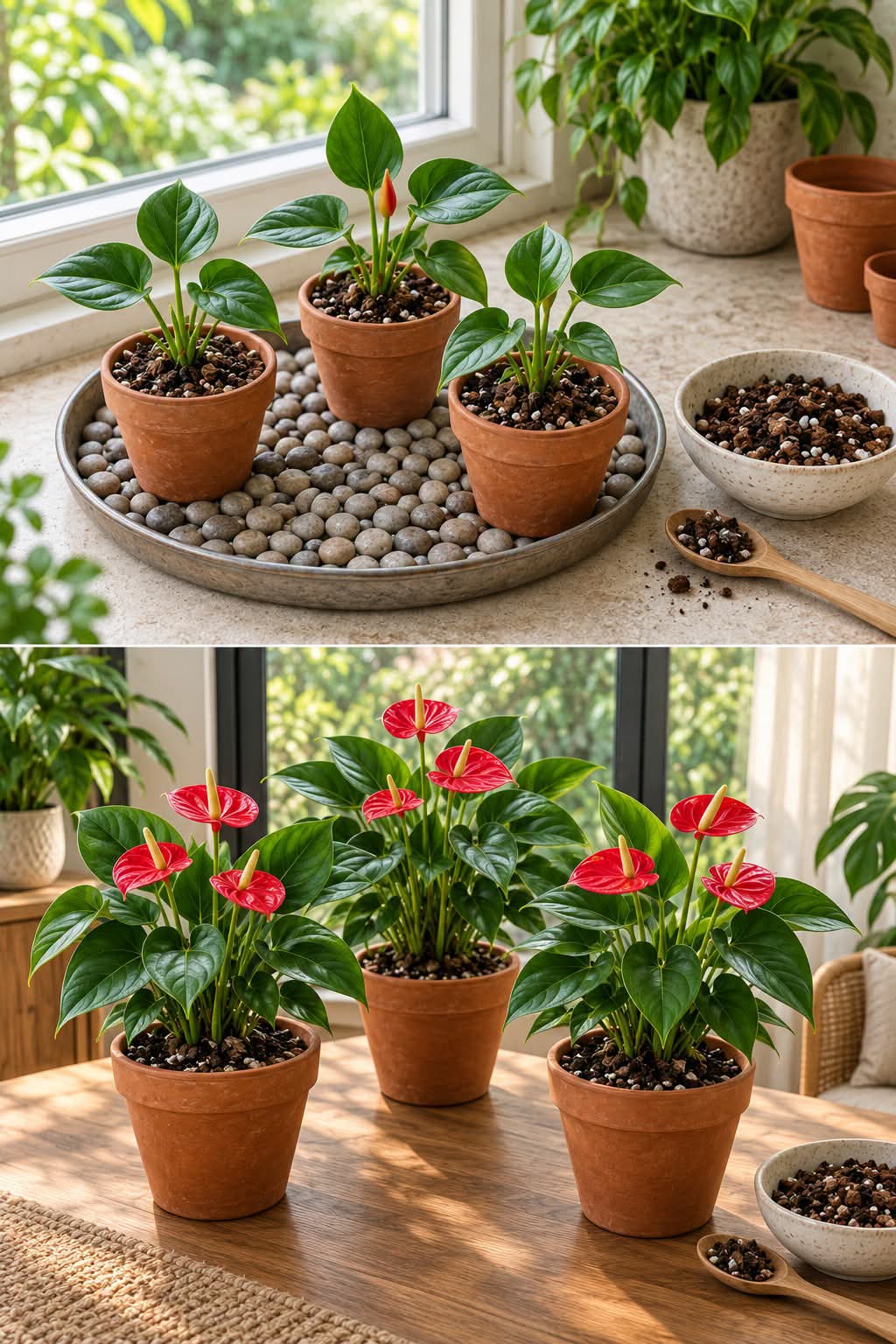
Cultivating tropical Anthurium plants (Anthurium andraeanum) with glossy heart-shaped foliage, strong aerial root systems, and bright red spathe blooms brings exotic botanical luxury, continuous flowering, and vibrant interior style directly into your home living space 🏠🌺. Displayed in rustic terracotta clay pots filled with coarse organic potting mix and arranged over pebble humidity trays, well-cared-for tropical plants transform indoor windowsills into flourishing garden sanctuaries 🌿✨.
While many plant lovers struggle with reluctant Anthuriums that produce leaves but fail to bloom, supplying organic soil amendments like specialized coarse potting substrates, crushed natural minerals, or organic liquid feeds triggers continuous red spathe formation and maintains lush green leaves 🔬🌱. Providing proper root humidity and airy soil substrate ensures your plants stay healthy and vibrant throughout the year 🧪⚠️.
In this ultimate Anthurium care guide, we will explore the botanical science behind organic tropical plant care, compare top indoor potted plant substrates side-by-side, detail step-by-step repotting and feeding instructions, and share essential long-term secrets for continuous blooming success 📝👇🛡️!
🌺 The Botanical Science Behind Vibrant Tropical Blooms 🧪✨
Feeding and potting epiphytic Anthuriums with coarse organic mixtures relies on root aeration, ambient humidity creation, and chlorophyll synthesis 🔬🧬.
Core Botanical Factors for Continuous Red Spathe Blooms:
- Airy Epiphytic Root Oxygenation 🪵: Anthuriums naturally grow as epiphytes on rainforest trees. Planting them in a coarse mix of orchid bark, perlite, and charcoal prevents compact soil, allowing oxygen to reach delicate root tissues.
- Humidity Microclimate via Pebble Trays 💧: Setting clay pots on shallow trays filled with river stones and water creates localized ambient moisture through continuous evaporation without wetting roots.
- Phosphorus & Potassium Translocation 🌺: Organic soil amendments rich in bio-available minerals stimulate the development of central flower spadixes and thick, wax-coated red spathes.
- Terracotta Moisture Regulation 🧱: Porous clay pots pull excess moisture out of wet soil substrate through evaporation, protecting underground crowns against fungal rot.
📊 Comprehensive Comparison: Popular Tropical Plant Substrates & Care
To help you choose the best soil preparation routine for your potted greenery, compare these effective indoor tropical care techniques side-by-side 📋👇:
| Care Method / Substrate Type 🛡️ | Main Component Mixture Base 🎯 | Primary Botanical Advantage ✨ | Application Schedule 🗓️ |
|---|---|---|---|
| Coarse Organic Epiphytic Mix 🪵 | Fir Bark, Perlite, Charcoal & Peat | Prevents root rot & maximizes soil aeration 🛡️ | Repot every 1 to 2 years ⏱️ |
| Pebble Tray Humidity Setup 🪨 | River Stones & Water Tray | Boosts surrounding air humidity naturally ✨ | Continuous daily maintenance 🗓️ |
| Fermented Rice Water Feed 🌾 | Starchy Organic Liquid | Feeds beneficial microbes & strengthens roots 🌿 | Every 2 to 3 weeks in spring/summer ⏱️ |
| Soluble Mineral Drench ⚪ | Epsom Salt Solution (MgSO_4) | Enhances leaf greening & flowering strength 🪴 | Once per month during growth ⏱️ |
🛡️ Key Benefits of Organic Epiphytic Anthurium Care 🌺✨
1. 100% Safe & Natural Root-Zone Protection 🛡️✨
Eliminates heavy synthetic chemical fertilizers that can cause salt burn, root tip browning, or leaf necrosis on sensitive tropical epiphytes!
2. Triggers Year-Round Waxy Red Spathe Blooms ✨
Delivers steady, bio-available organic minerals that encourage plant crowns to produce multiple flower spikes with vibrant red spathes.
3. Keeps Foliage Glossy, Firm & Deep Green 🏠🪙
Optimizes root water absorption and nutrient transport, keeping heart-shaped leaves thick, shiny, and resistant to dehydration.
4. Extremely Simple & Accessible Home Setup 🪴✨
Uses basic terracotta clay pots, river pebbles, and coarse bark mixes to create nursery-grade growth conditions inside ordinary living rooms!
📝 Step-by-Step Guide: How to Pot & Care for Anthuriums 🏺🧪
Pro-Tip: Always ensure your terracotta pot has a large bottom drainage hole, and never allow the bottom of the pot to sit directly in water inside the pebble tray!
1. Prepare Coarse Epiphytic Substrate 🪵🌾
- Combine 2\text{ parts} coarse orchid fir bark, 1\text{ part} perlite, 1\text{ part} horticultural charcoal, and 1\text{ part} peat moss in a mixing bucket.
- Moisten the substrate mix slightly with clean room-temperature water.
2. Plant in Porous Terracotta Pots 🏺🟢
- Place a mesh screen over the bottom drainage hole of a terracotta clay pot.
- Fill the bottom third with coarse mix, position the Anthurium plant gently, and fill in around roots with the remaining potting mixture.
- Press lightly to secure the plant without compacting the airy potting medium.
3. Set Up Pebble Humidity Tray 🪨💧
- Fill a shallow tray with a layer of smooth river stones or pebbles.
- Pour water into the tray so the level sits just below the top surface of the pebbles.
- Place the potted Anthurium directly on top of the dry pebbles above the water line.
4. Apply Organic Liquid Feed & Position ☀️🪴
- Apply a mild organic liquid drench (like diluted starch water or a light organic amendment) around the root zone every 2 to 3 weeks during active growth.
- Place in a bright indoor spot receiving indirect sunlight near a window. Avoid harsh direct sun rays that scorch glossy leaves!
🗓️ Essential Rules for Tropical Anthurium Success 💡🛡️
Following proper humidity management, light exposure, and watering cycles guarantees healthy blooms year-round 🌟:
- Avoid Over-Watering Dense Soil 🚫: Dense, soggy soil starves roots of oxygen. Always wait until the top 1\text{ to }2\text{ inches} (2.5\text{ to }5\text{ cm}) of coarse mix feel dry before watering again.
- Keep Leaves Clean & Dust-Free 🧽: Wipe glossy leaf blades periodically with a damp cloth to clear pores, improving photosynthesis and shiny aesthetic appeal.
- Maintain Warm Temperatures 🌡️: Keep Anthuriums in rooms with temperatures between 18^\circ\text{C} and 26^\circ\text{C}. Protect plants from cold window drafts or air conditioning units.
- Prune Spent Flowers Correctly ✂️: Snip off fading or browning flower stalks near the base of the crown using clean shears to redirect energy toward new buds!
🌟 Final Thoughts
Cultivating Flamingo Flowers using coarse organic potting mixes and pebble humidity setups is a simple, highly rewarding, and foolproof plant care secret for enjoying continuous red blooms 🌺🪴✨. By mastering gentle epiphytic root care, ensuring proper soil drainage, and providing bright indirect lighting, you guarantee long-lasting tropical elegance that brightens your home living space 🏠🛡️. Try this easy natural care routine today and watch your Anthuriums bloom! 🚀🟢💛