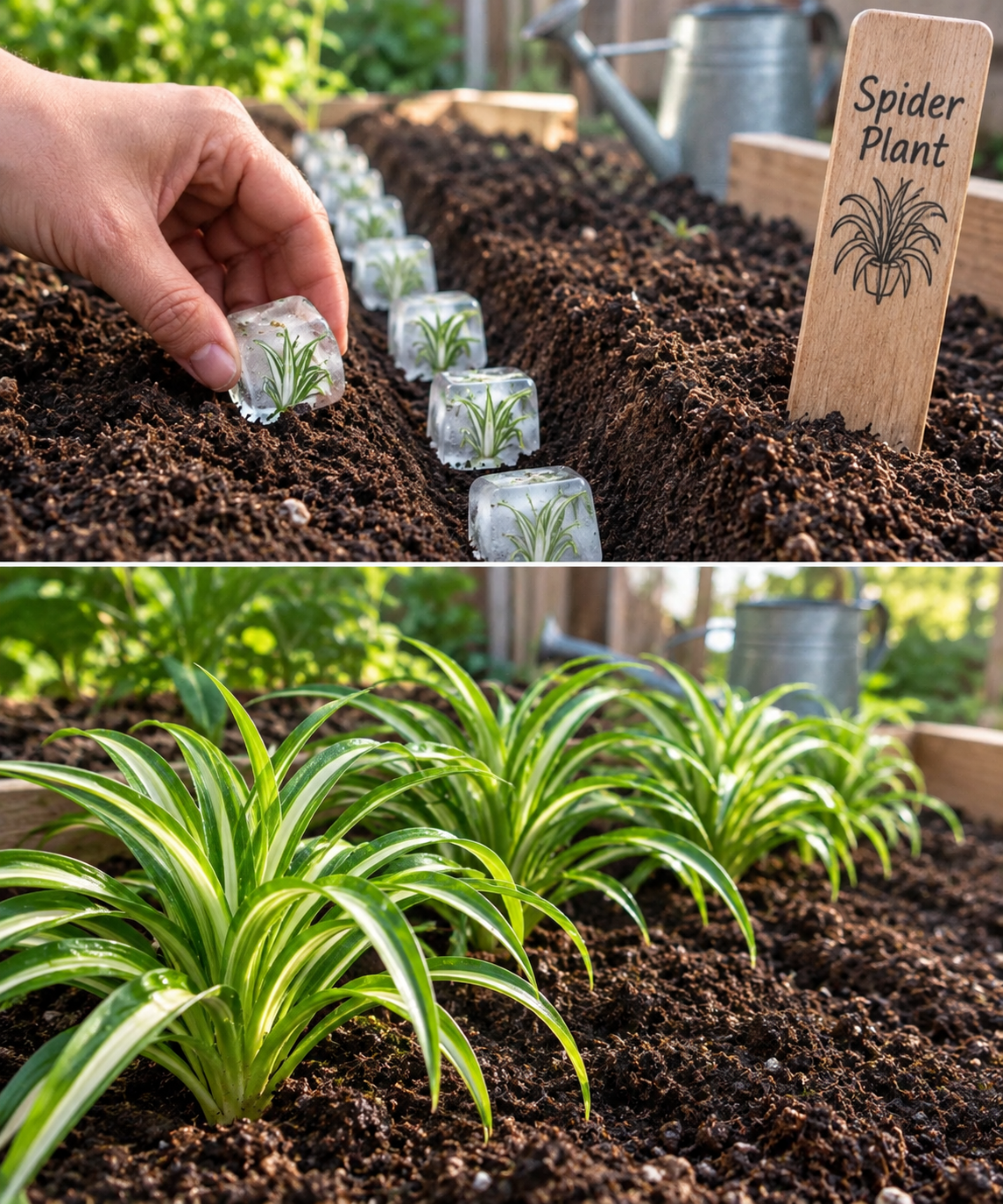
Spider Plant (Chlorophytum comosum) Propagation & Nutrient-Infused Ice Cube Watering Hack
The Spider Plant (Chlorophytum comosum) is renowned for its arching green-and-white foliage and prolific production of plantlets (“spiderettes”). Adapting the innovative **ice cube planting and slow-release watering method** provides an exceptionally clean, controlled way to propagate spider plant seeds or tiny plantlet cuttings while delivering a steady, slow-drip release of organic nutrients directly into the soil.
1. Why Use Bio-Nutrient Ice Cubes for Spider Plants?
Spider plants develop thick, fleshy tuberous roots that store water efficiently. Traditional heavy watering can easily cause soil compaction or root rot. Using organic nutrient ice cubes offers unique advantages:
- Zero Moisture Shock: As room-temperature soil gradually melts the cube, moisture is absorbed evenly without waterlogging the tuberous root system.
- Precision Seedling Placement: Freezing tiny spider plant seeds or small plantlet roots into ice cubes guarantees exact planting depth and uniform spacing in soil troughs.
- Micro-Dose Fertilization: Infusing the water with diluted organic compost tea or botanical extracts delivers micro-nutrients consistently as the ice melts.
2. Step-by-Step Ice Cube Propagation & Nutrient Recipe
Ingredients & Tools Needed:
- Fresh Spider Plant seeds or tiny plantlet node cuttings
- Ice cube tray
- 1 cup filtered water or rainwater
- 2 tablespoons strained compost tea or diluted organic liquid fertilizer
- Well-draining potting soil mix (perlite + peat moss + coco coir)
- Planting tray or container
Instructional Steps:
- Prepare the Nutrient Solution: Mix 1 cup of filtered water with 2 tablespoons of strained compost tea until fully combined and light amber in color.
- Fill the Ice Tray: Pour the nutrient liquid into individual sections of an ice cube tray, filling each cell halfway.
- Insert Seeds or Roots: Carefully place 1–2 spider plant seeds or the base node of a small spiderette into each cell, then top off with remaining liquid.
- Freeze: Freeze the tray for 4 to 6 hours until solid cubes are formed.
- Plant in Soil: Make shallow planting grooves in moist soil. Place the ice cubes spaced 2–3 inches apart and lightly cover with a thin layer of fine topsoil. As the ice melts, seeds/roots settle perfectly with instant moisture and feed.
3. Application Guidelines & Root Health Comparison
| Watering Method | Moisture Distribution | Risk of Root Rot | Nutrient Delivery |
|---|---|---|---|
| Nutrient Ice Cube Drip | Slow, steady, and localized absorption | Very Low (prevents standing water) | Controlled micro-dosing directly at root depth |
| Traditional Pour Watering | Rapid, often uneven or top-heavy | Moderate to High if overwatered | Prone to nutrient leaching through drainage holes |
4. Frequently Asked Questions (FAQ)
A: When buried under a thin layer of soil at room temperature, the ice cube melts gradually rather than freezing the surrounding soil, making it safe for tropical root systems.
A: You can place 2–3 nutrient ice cubes around the soil perimeter once a week during the active growing season (spring and summer).
A: It is best to use filtered water or rainwater, as spider plants are sensitive to fluoride and chlorine found in tap water, which can cause brown leaf tips.
Final Thoughts
Using the **nutrient-infused ice cube method** for your **Spider Plant** combines precise seed planting with a slow-drip organic feeding technique—ensuring healthy root development, vibrant variegated leaves, and abundant baby spiderettes!