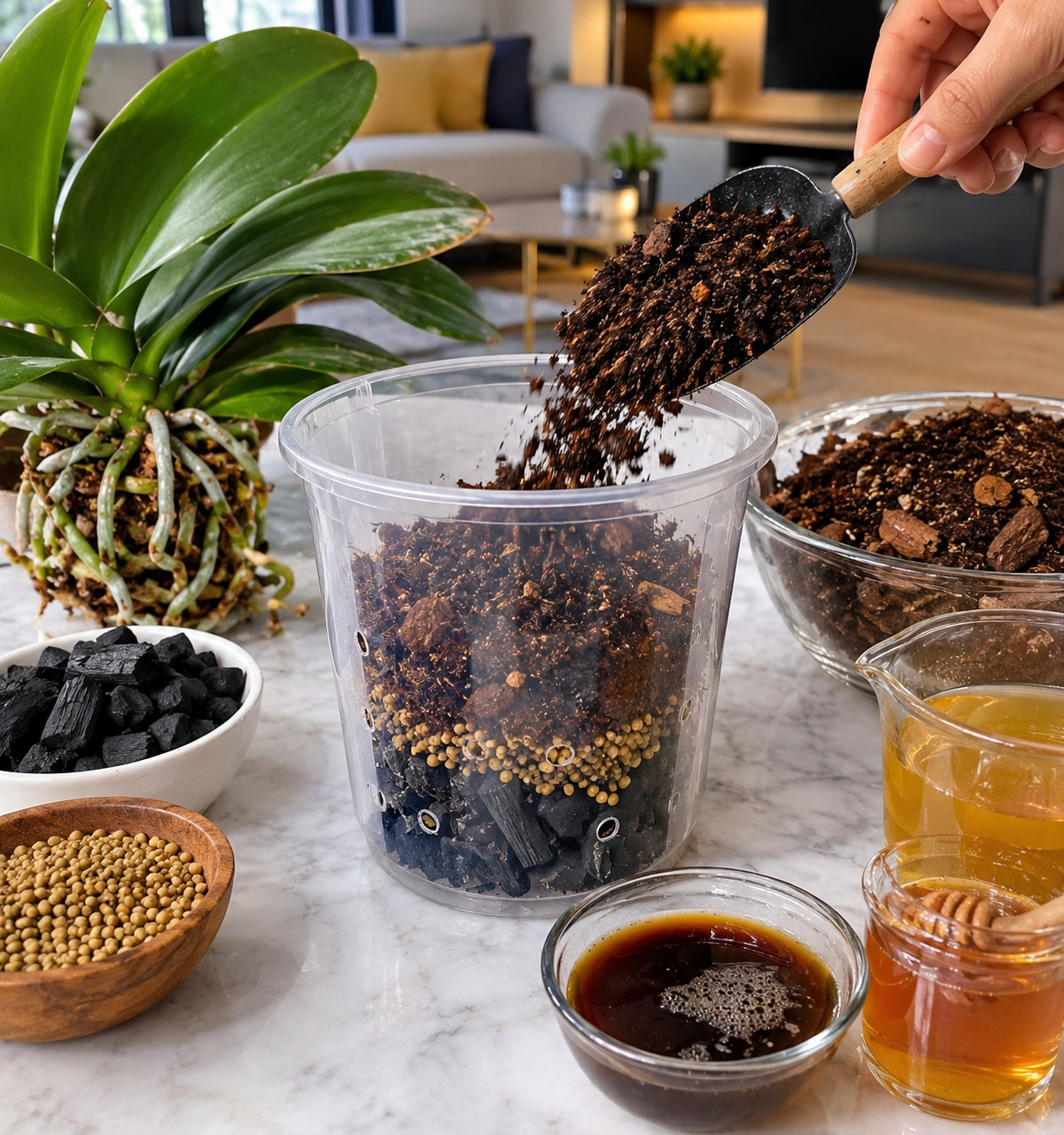
Orchid Potting & Root Regeneration: Charcoal Potting Medium & Honey-Compost Tea Drench
Orchids (such as Phalaenopsis) are epiphytic plants that naturally grow attached to trees rather than in dense soil. Potting an orchid in a clear or slotted plastic pot using a airy mix of horticultural charcoal chunks, coarse orchid bark, and light organic substrate provides superior aeration. Nourishing the root zone with a liquid solution made from honey, warm water, and compost tea delivers antibacterial protection and natural rooting hormones to encourage strong, green aerial roots.
1. The Role of Charcoal & Honey-Compost Solution
Combining structural aeration with organic root boosters creates an optimal growth environment for delicate orchid roots:
- Horticultural Charcoal: Acts as a porous filter, preventing bacterial buildup, stabilizing soil pH, and allowing oxygen to reach root surfaces.
- Pure Honey (Antibacterial & Rooting Agent): Raw honey contains enzymes and natural sugars that protect fresh root cuts against fungal spores while stimulating root initiation.
- Compost Tea (Organic Nutrients): Introduces beneficial soil microbes and bioavailable trace elements that trigger leaf growth and flower stalk development.
2. Step-by-Step Potting & Nourishment Recipe
Materials Needed:
- Clear or slotted plastic orchid pot (with ample bottom and side drainage)
- 1–2 cups natural horticultural charcoal chunks
- Coarse orchid potting mix (pine bark, perlite, sphagnum moss)
- 1 tablespoon pure organic honey
- 1 cup strained compost tea
- 1 quart warm filtered water
Instructional Steps:
- Prepare the Drainage Base: Place a layer of clean charcoal chunks at the bottom of the plastic pot to establish a drainage buffer.
- Pot the Orchid: Position the orchid so its crown rests just above the rim. Fill around the root system with a loose mix of orchid bark and remaining charcoal chunks. Avoid compacting the medium.
- Prepare the Liquid Drench: Dissolve 1 tablespoon of raw honey in 1 cup of warm water until fully liquid. Blend in 1 cup of strained compost tea and dilute with the remaining warm water.
- Apply the Golden Drench: Slowly pour the yellow honey-compost solution around the perimeter of the pot, allowing it to soak the roots and drain freely out the bottom holes.
3. Substrate & Liquid Component Breakdown
| Ingredient | Function | Benefit to Orchid |
|---|---|---|
| Charcoal Chunks | Aeration & toxin absorption | Prevents root rot and souring of the potting medium |
| Raw Honey | Antiseptic & natural stimulant | Heals damaged root tissues and encourages new root tips |
| Compost Tea | Microbial boost & organic NPK | Supplies gentle, non-burning nutrients for steady growth |
4. Frequently Asked Questions (FAQ)
A: Clear plastic pots allow light to reach orchid roots (which perform photosynthesis) and let you monitor root health and moisture levels without disturbing the plant.
A: Diluting honey in water and allowing excess solution to drain thoroughly prevents sticky residues from attracting pests while delivering root benefits.
A: Apply the honey-compost tea drench once every 3 to 4 weeks during the active growth season (spring and summer).
Final Thoughts
Using **horticultural charcoal** alongside a nutrient-rich **honey and compost tea solution** creates the ultimate setup for thriving orchids with vibrant leaves and continuous blooms!