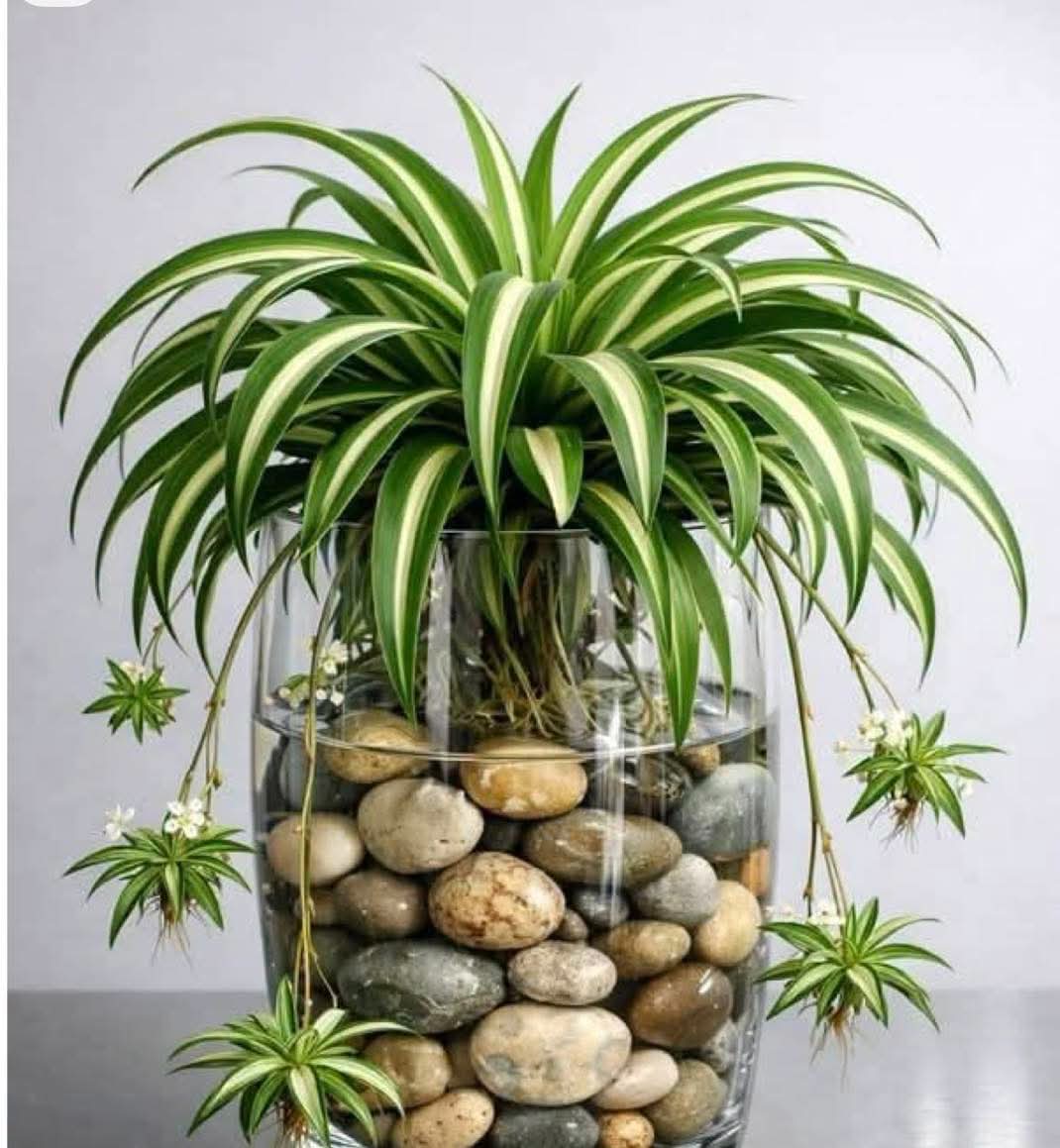
Are you looking for a clean, modern way to bring vibrant nature into your home without dealing with messy dirt and soil pests? 😩 Indoor soil potting often leads to accidental spills, stubborn fungus gnats, and messy repotting sessions that leave your table surfaces dirty! 🪴💔 Don’t worry, plant lovers! You can grow flourishing Spider Plants (Chlorophytum comosum) directly inside clear glass containers filled with smooth river stones and fresh water! 🌿🏡
Cultivating indoor greenery in glass water displays adds a luxurious, spa-like aesthetic to office desks, bookshelves, and dining tables. 🏺✨ By anchoring plant bases with decorative pebbles and keeping the water oxygenated, you can observe healthy white roots grow through crystal-clear glass while cascading “spiderettes” hang beautifully around the vessel! 🌿 Arching variegated leaves, thriving baby plantlets, and a 100% mess-free environment are just a simple water setup away! 🎉👇
🌟 Why Switch to Water Cultivation in Glass Vases? 🤔💭
Transitioning your houseplants from traditional potting mix to hydro-culture in clear glass vessels provides amazing advantages for modern indoor gardeners:
- Zero Dirt & Pest Prevention 🪰: Say goodbye to soil-borne pests like fungus gnats, mold spores, and muddy spills on your furniture!
- Visible Root Health 🔍: Clear glass lets you inspect root development, water clarity, and water levels at a glance without stressing the plant.
- Modern Aesthetic Appeal 🏡: Smooth river stones combined with clear water create an elegant, minimalist interior decoration that instantly brightens any room.
- Low Maintenance Needs 💧: No more guessing whether soil is too wet or too dry! Just top up clean water when levels drop and wash the glass vase monthly.
🧪 The Science Behind Hydroponic Pebble Cultivation 🔬✨
How do plants thrive in plain water and pebbles without suffering from root rot or drowning? It relies on biological mechanics and oxygen exchange! 🧬🌱
- Pebble Anchorage & Height Control 🪨: Stacking smooth pebbles provides physical stability for central root crowns, suspending leafy foliage safely above the water line while letting fine roots stretch downward.
- Dissolved Oxygen Flow 💨: Fresh water holds dissolved oxygen (O_2) necessary for root respiration. Replacing water regularly prevents stagnation and fuels active root division.
- Nutrient Uptake via Water 🧽: Water carries liquid minerals directly to fleshy root systems, keeping leaves vibrant green, variegated, and well-hydrated throughout every season!
📊 Traditional Soil Potting vs. Glass Water Cultivation Comparison 📑💡
To help you decide on the best setup for your indoor space, review this detailed comparison chart contrasting soil-based care with glass vase hydro-culture! 🌺👇
| Feature / Care Factor 📋 | Traditional Potting Soil 🪴 | Glass Vessel Water Cultivation 🏺✨ |
|---|---|---|
| Primary Growing Medium | Organic potting soil & peat | Purified water & natural river stones |
| Soil Pest Risk | High (fungus gnats, soil mold) | Completely pest-free & hygienic 🛡️ |
| Root Visibility | Hidden inside opaque pots | 100% visible 360° root inspection |
| Decorative Appeal | Standard plastic or ceramic pots | Luxurious, modern glass terrarium style 💎 |
| Watering Schedule | Moisture checks every few days | Simple water top-ups every 1–2 weeks |
| Plantlet (Pup) Yield | High vegetative growth | Continuous |
📝 Step-by-Step Guide: How to Plant in Glass Vases with Pebbles 🪴✨
Setting up your soil-free plant display in a clear glass vessel is quick, clean, and deeply satisfying! Follow these simple steps to build your own gorgeous water centerpiece:
Step 1: Prepare Clean Glass Vases & River Stones 🏺✨
- Select a wide, sturdy glass vase or cylinder that comfortably accommodates root volume.
- Rinse smooth river stones thoroughly under running warm water to wash away surface dust, sand, and fine particles.
Step 2: Build the Stone Base 🪨💧
- Fill the bottom 3 to 4 inches of your glass vase with a dense layer of clean river stones.
- This stone bed provides weight to keep the vase stable and creates an attractive architectural base!
Step 3: Prepare Your Plant & Secure the Crown ✂️🌿
- Gently remove your plant (or offshoot) from its pot and wash away all soil remnants from roots using lukewarm water until roots are completely clean! 🧼
- Position the plant in the middle of the vase, resting the root crown carefully atop the stone layer.
- Add extra river stones around the root base to keep the plant firmly upright!
Step 4: Add Fresh Purified Water 💧🌸
- Pour room-temperature filtered or distilled water into the vase until it covers the lower roots and stones.
- Important: Keep the main leafy crown slightly above the water line to prevent leaf rot! 🚫💧
🌺 Pro-Tips for Maintaining Long-Lasting Water Plants 🎁✨
Keep these essential care tips in mind to ensure your hydro-grown plant stays vibrant and continues producing baby plantlets year-round:
- Refresh Water Regularly 💧: Change the vase water completely every 7 to 10 days to maintain high oxygen levels and keep the glass sparkling clear.
- Avoid Direct Sun ☀️: Place your glass vase in bright, indirect sunlight. Direct sun rays heat up glass containers, scorch delicate roots, and encourage green algae growth!
- Add Hydroponic Fertilizer Monthly 🧪: Add 1 to 2 drops of gentle liquid houseplant fertilizer during monthly water changes to supply essential minerals for foliage growth and flowering!
🌟 Transform Your Home into a Fresh Botanical Sanctuary! 🏡💖
Growing cascading houseplants in clear glass vases filled with natural river stones is an easy, clean, and visually captivating way to enjoy nature indoors! 🌸✨ Enjoy watching roots flourish through crystal-clear glass while adding a sleek, refreshing element to your living space! 😍🙌
Have you tried growing indoor plants in glass water vases with river stones? What is your favorite plant to grow using soil-free hydro-culture? Share your ideas, questions, and plant setup photos in the comments below! 📸👇 Happy Gardening! 🌿💖🎉