Are you tired of staring at stubborn orchids that refuse to bloom year after year? 😩 You shower them with love, place them near bright windows, water them carefully, yet they give you nothing but plain green leaves! 🪴💔 Don’t worry, fellow indoor gardening enthusiasts! You are definitely not alone in this botanical struggle. Thousands of plant parents struggle to get their orchids (Phalaenopsis) to rebloom after their initial flowering cycle ends. 🌸⚡
The fantastic news? You do NOT need expensive commercial fertilizers or harsh synthetic chemicals to trigger non-stop orchid blooms! 🚫🧪 Right inside your kitchen pantry lies a natural combination that acts as a magical health booster and antimicrobial shield for delicate orchid roots! 🍋🍂
By infusing fresh lime slices and cinnamon sticks into water, you create an organic liquid elixir that protects aerial roots from fungal rot, balances substrate pH, and stimulates vibrant floral spikes! 🌺 Stunning, long-lasting flowers and robust roots are just a simple steep away! 🎉👇
🌟 Why Do Orchids Stop Blooming and Lose Root Vigor? 🤔💭
Before exploring our secret natural recipe, let’s understand why indoor orchids often go dormant or suffer in typical home environments:
- Fungal & Bacterial Infections 🦠: Orchids are epiphytes that naturally grow on tree bark. Excess moisture in pots attracts fungi and bacteria that rot delicate aerial roots.
- Substrate pH Imbalance 🧪: Over time, potting bark degrades and turns overly acidic or salty, preventing roots from absorbing vital water and minerals.
- Lack of Root Stimulation 🪴: Standard tap water lacks natural trace minerals, organic acids, and natural antifungal agents that wild orchids receive in natural rainforest environments.
- Environmental Stress 🌡️: Sudden temperature shifts or dry indoor heating air cause orchid flower buds to yellow, dry out, and drop prematurely.
🧪 The Science Behind the Natural Citrus & Spice Elixir 🔬✨
What makes this natural kitchen mixture so incredibly effective for orchids? It relies on brilliant botanical synergy! 🧬🌱
- Citric Acid & Vitamin C Boost 🍋: Fresh lime juice lowers water pH slightly to mimic natural rain in tropical canopies. This gentle acidity dissolves mineral deposits on orchid roots and enhances nutrient absorption!
- Antifungal & Antibacterial Protection 🍂: Cinnamon contains cinnamaldehyde, a potent natural fungicide. It combats root rot, seals micro-wounds on aerial roots, and keeps orchid bark fresh and clean.
- Natural Mini-Greenhouse Effect 🛍️: Enclosing treated orchids loosely in clear plastic bags creates a high-humidity microclimate that stimulates dormant nodes on flower spikes to produce fresh flower buds!
📊 Comprehensive Care & Treatment Comparison Chart 📑💡
To help you manage your orchid care routine effectively, follow this structured guide comparing conventional orchid care with our specialized natural infusion treatment! 🌸👇
| Care Parameter 📋 | Standard Water & Fertilizer Routine 💧 | Natural Citrus & Cinnamon Infusion 🍋🍂 |
|---|---|---|
| Primary Goal | Basic moisture and maintenance | Root protection & continuous blooming |
| Key Ingredients | Tap water & chemical orchid food | Fresh lime slices, cinnamon sticks, filtered water |
| Root Protection | Minimal defense against fungal rot | High natural antifungal & antibacterial defense 🛡️ |
| Application Method | Regular top-watering | Soaking bath or humidity tent method 🛍️ |
| Bloom Frequency | Once per year (or irregular) | Frequent reblooming & prolonged flowers 🌺 |
| Best Timing | Active growing season (Spring) | Post |
📝 Step-by-Step Guide: How to Prepare & Apply the Treatment 🪴✨
Follow these simple, step-by-step instructions to safely prepare and apply this organic elixir to your orchids! 🎨👇
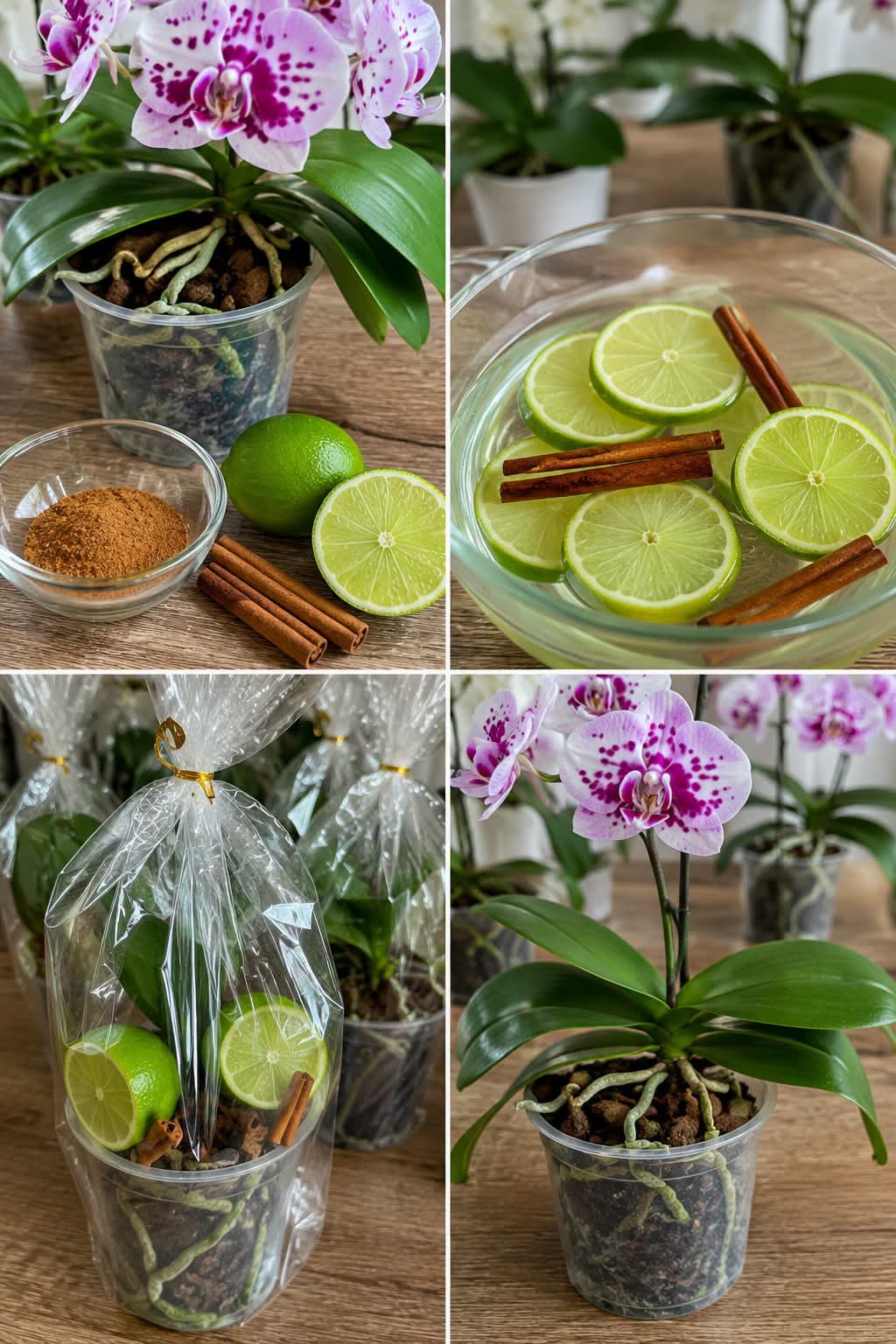
Step 1: Prepare the Botanical Infusion 🍋🍂
- Slice 1 fresh green lime into thin rounds and grab 3–4 natural cinnamon sticks (or 1 teaspoon of pure ground cinnamon).
- Place them into a large glass bowl or jar filled with 1 liter of warm filtered water.
- Let the mixture steep at room temperature for 3 to 4 hours so the water absorbs active compounds and essential oils.
Step 2: Strain and Dilute 🥤✨
- Strain out the lime slices and cinnamon pieces using a fine sieve.
- Dilute the concentrated amber liquid with equal parts fresh room-temperature water to ensure a mild, gentle treatment for delicate roots.
Step 3: Hydrate and Treat the Roots 🪴💧
- Place your orchid’s inner nursery pot into the bowl containing the infused water.
- Allow the roots and bark substrate to soak up the liquid for 10 to 15 minutes. Watch the silver aerial roots transform into a healthy, vibrant green! 🌿
Step 4: Create a High-Humidity Greenhouse (Optional) 🛍️✨
- Place a slice of fresh lime and a cinnamon stick into the bottom saucer or outer pot (without direct root contact).
- Cover the entire potted plant loosely with a clear, ventilated plastic bag for a few days to create a humid microclimate that triggers rapid bud development! 🌸
🌺 Pro-Tips for Long-Lasting Orchid Flowers 🎁✨
Keep these expert tips in mind to enjoy healthy roots and beautiful blooms all year long:
- Use Clear Pots 🏺: Orchid roots perform photosynthesis! Keeping them in transparent plastic containers allows light to reach aerial roots, keeping the plant energetic and blooming.
- Avoid Water in the Crown 🛑💧: Always pour water onto the bark substrate, never into the central leafy crown! Trapped water in the leaf crown causes rapid crown rot.
- Provide Bright Indirect Sunlight ☀️: Place orchids near east- or north-facing windows where they receive plenty of bright, filtered light without harsh direct sun rays.
🌟 Transform Your Home into a Floral Sanctuary! 🏡💖
With just a few slices of fresh lime and a pinch of aromatic cinnamon, you can protect your orchids from root rot and unlock continuous, breathtaking floral displays! 🌸✨ Say goodbye to stubborn green leaves and hello to magnificent, vibrant blooms that brighten up your living space! 😍🙌
Have you ever tried using natural kitchen ingredients to nourish your orchids? Share your thoughts, questions, and flowering plant photos in the comments below! 📸👇 Happy Gardening! 🌿💖🎉