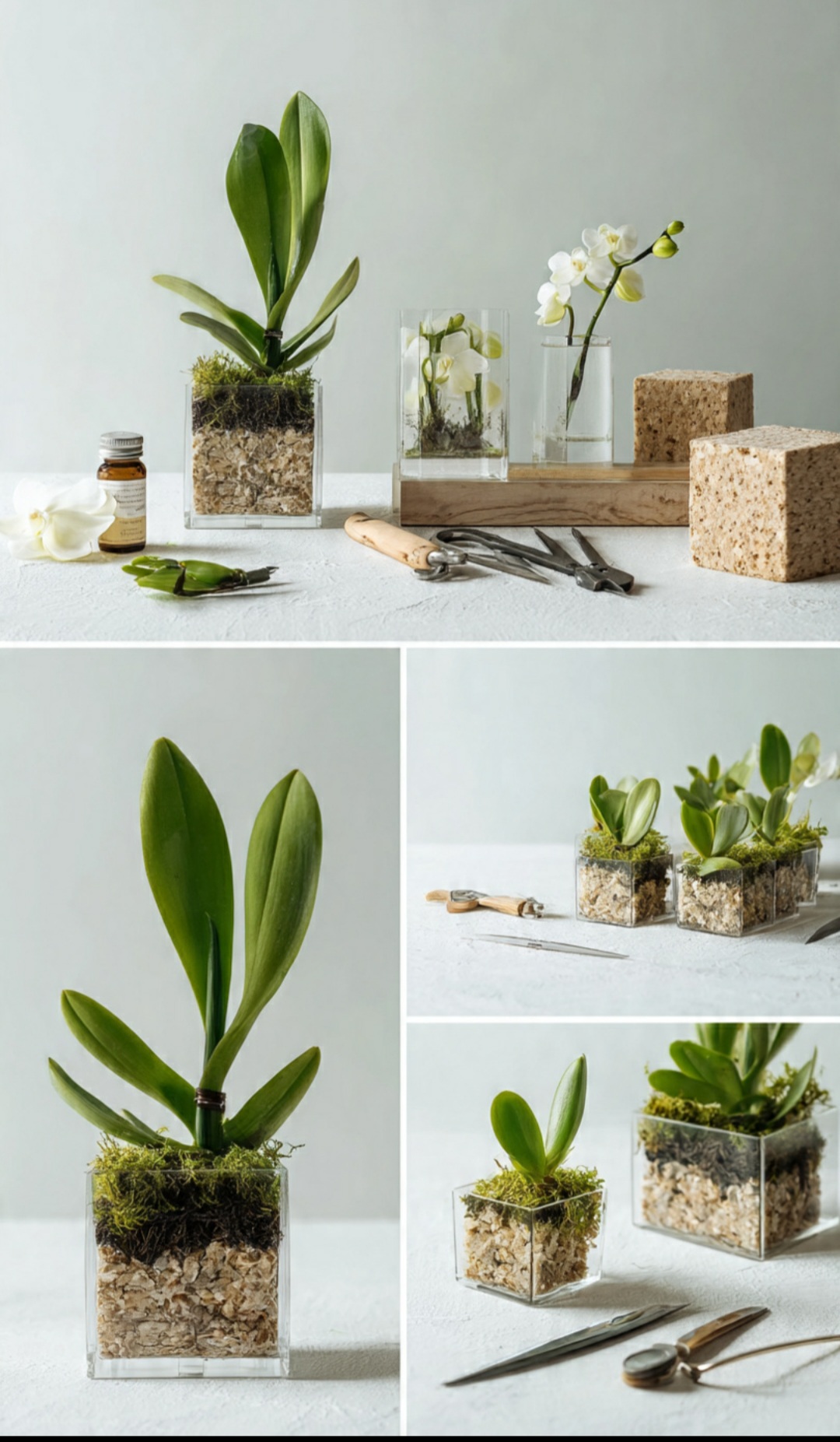
Cultivating orchids and green houseplants in modern, minimalist glass planters filled with layered moss and substrate brings an elegant, spa-like aesthetic into any living space 🏠🌿. Featuring clean transparent square containers, lush green leaves, white floral spikes, and natural moss topping, glass arrangement displays serve as stunning botanical art for home interior decor 🪴✨.
Beyond their visual appeal, propagating and growing orchids in clear glass vessels allows home gardeners to monitor root health, humidity levels, and moisture retention in real time 🔬🌱. Paired with proper stem division tools, natural bio-stimulant drops, and structured substrate layering, glass propagation yields rapid root branching and long-lasting floral displays 🧪⚠️.
In this master plant care guide, we will explore the botanical science behind hydroponic and semi-hydroponic glass propagation, compare growing substrates side-by-side, detail step-by-step arrangement assembly rules, and share essential long-term maintenance secrets for thriving indoor plants 📝👇🛡️!
🌿 The Botanical Science Behind Glass Vessel Propagation & Layered Substrates 🧪✨
Growing plants in clear glass vessels requires a precise balance between root oxygenation, moisture retention, and microbial prevention since glass pots lack traditional bottom drainage holes 🔬🧬.
Core Factors for Hydro-Glass Root Health & Blooming:
- Root Light Absorption & Chloroplast Function 🌿: Orchid aerial roots contain chlorophyll and absorb light directly. Clear glass vessels expose roots to ambient light, boosting photosynthetic activity and root cell vitality.
- Layered Substrate Drainage Aeration 🪨: Stacking coarse gravel, expanded clay, or bark at the base creates a drainage reservoir, keeping lower roots elevated above stagnant water to prevent pythium root rot.
- Sphagnum Moss Humidity Blanket 🟩: Placing live or preserved sphagnum moss on the top layer locks in ambient humidity around the plant base, simulating tropical canopy microclimates.
- Natural Bio-Stimulant Activation 💧: Administering concentrated plant nutrient drops directly into the root layer provides micro-nutrients (potassium, nitrogen, and B-vitamins) that stimulate rapid root division and fresh bloom spikes.
📊 Comprehensive Comparison: Indoor Glass Vessel Substrates & Media
To help you choose the best growing medium for your glass vessel plant propagation, compare these popular choices side-by-side 📋👇:
| Substrate Medium 🛡️ | Moisture Retention Level 💧 | Aeration & Oxygen Flow ✨ | Best Use Case 🗓️ |
|---|---|---|---|
| Sphagnum Moss Layer 🟩 | High moisture retention | Moderate airflow | Top layer humidity blanket 🛡️ |
| Coarse Bark & Pebble Base 🪨 | Low moisture retention | Maximum root aeration | Bottom drainage reservoir ⏱️ |
| LECA (Clay Pebbles) 🟤 | Balanced capillary wicking | High airflow & root support | Semi-hydroponic glass setup 🌿 |
| Clear Water / Hydroponic 💧 | Continuous moisture | Requires water refreshing | Rooting |
🛡️ Key Benefits of Glass Vessel Propagation & Indoor Decor 🌸✨
1. 100% Visual Root Monitoring 🛡️✨
Clear glass planters let you inspect root growth, identify silvery-gray thirsty roots instantly, and catch potential decay before it affects the entire plant.
2. High Ambient Humidity Retention 🪴✨
Glass walls act as a mini-greenhouse structure, trapping moisture vapor around the roots and reducing the need for constant daily watering.
3. Space-Saving Minimalist Interior Decor 🏠✨
Compact glass cubes fit easily on windowsills, coffee tables, or office desks, bringing fresh greenery and white floral accents into smaller modern apartments.
4. Effortless Propagation & Repotting ✂️🪙
Glass arrangements make dividing plant keikis and rooting stem cuttings straightforward, allowing you to multiply your houseplant collection at zero extra cost!
📝 Step-by-Step Guide: Assembling & Caring for Glass Vessel Arrangements 🏺🌿
Pro-Tip: Always use distilled or filtered water when filling glass vessels to prevent white mineral scale buildup on container walls!
1. Sterilize Tools & Prepare Glass Containers ✂️🧪
- Wipe down small pruning shears, tweezers, and square glass vessels with rubbing alcohol to eliminate bacteria.
2. Build the Layered Drainage Base 🪨🪴
- Fill the bottom 1.5\text{ inches} of the glass vessel with clean gravel, perlite, or small pebbles to form a water reservoir.
- Add a middle layer of coarse orchid bark mixed with charcoal to keep the substrate fresh and aerated.
3. Position Plant & Add Moss Topping 🌿🟩
- Place the rooted orchid or cutting gently inside the container, spreading roots evenly over the bark layer.
- Surround the root crown with moist sphagnum moss to hold the plant firmly upright while trapping moisture.
4. Administer Nutrient Drops & Position Light ☀️💧
- Apply 2\text{ to }3\text{ drops} of liquid plant fertilizer or bio-stimulant into the substrate layer.
- Place the vessel in a warm spot (18^\circ\text{C} to 24^\circ\text{C}) receiving bright, indirect sunlight.
🗓️ Essential Rules for Healthy Glass Planter Care 💡🛡️
Following strict watering, lighting, and cleanliness habits ensures long-term plant vigor in containers without drainage 🌟:
- Strict Light-Watering Rule 💧: Water sparingly—only pour enough liquid to fill the bottom gravel layer by half. Never flood the upper moss or submerge root crowns in standing water!
- Bright Indirect Sunlight ☀️: Keep glass containers away from intense direct sun. Sunlight hitting glass acts like a magnifying lens, which can overheat soil and scorch roots!
- Algae Prevention & Cleaning 🧽: If green algae forms on glass walls, gently flush the vessel with clean water or wipe interior glass surfaces with a soft cotton swab during seasonal repotting.
- Air Circulation Around Stems 🌬️: Ensure good room airflow so top moss layers dry slightly between waterings, preventing mold formation.
🌟 Final Thoughts
Growing houseplants in Layered Glass Propagation Vessels is an elegant, fascinating, and highly rewarding approach to indoor gardening 🌿🌸✨. By layering substrate materials correctly, monitoring root moisture visually, and applying concentrated nutrient drops, you create a self-sustaining micro-environment that fuels lush foliage and continuous blooming 🏠🛡️. Try assembling your own glass plant arrangement today and elevate your home decor! 🚀🟢💛