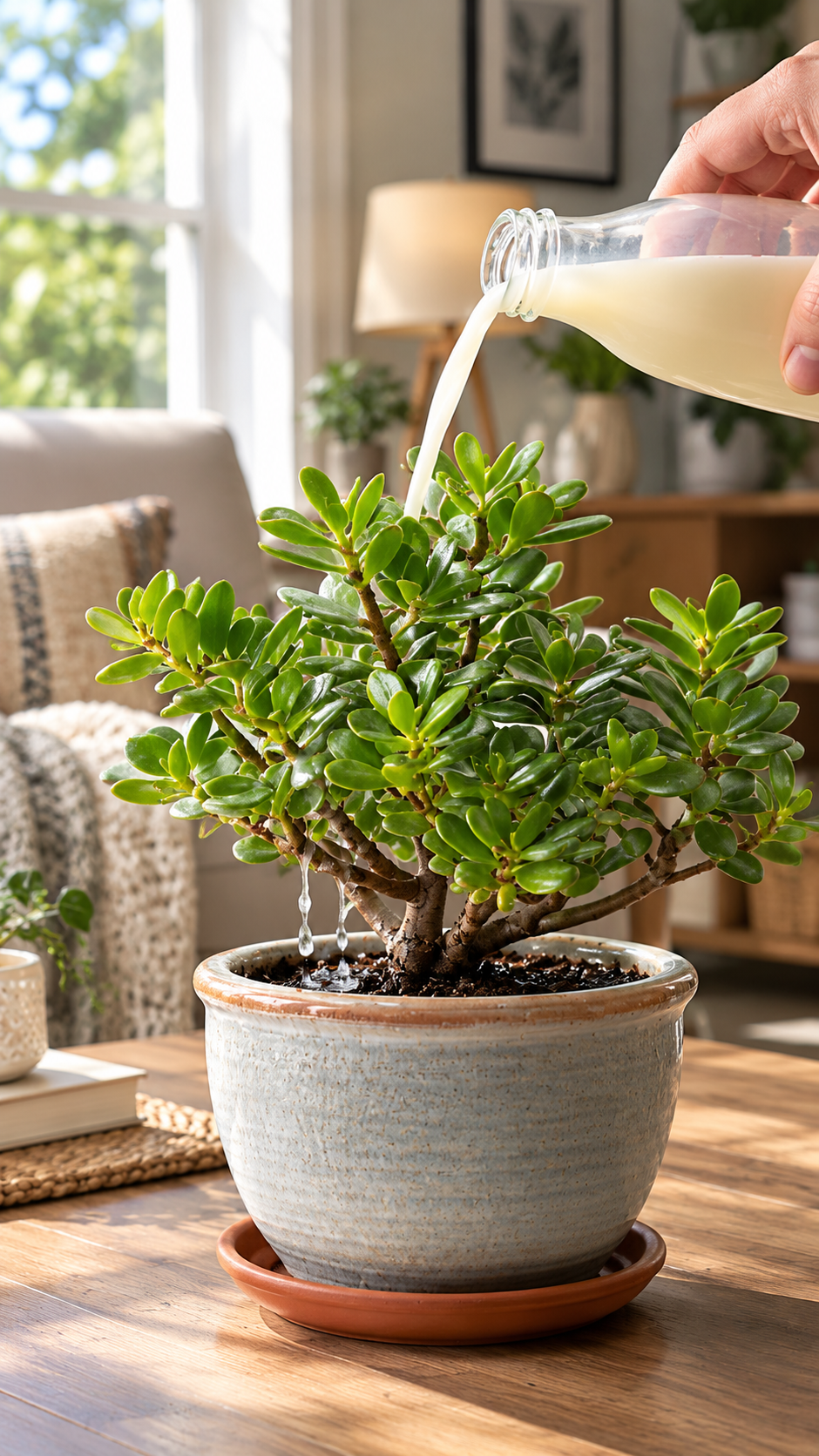
Milk Fertilizer for Jade Plants: Boost Calcium & Strengthen Thick Succulent Leaves
The Jade Plant (Crassula ovata) is beloved for its plump, glossy green leaves and wood-like stems. As succulents, Jade plants require careful nutrient management; excess nitrogen or harsh synthetic fertilizers can cause soft, leggy stems and leaf drop. Utilizing **diluted milk** as an organic supplement provides calcium, proteins, and essential micro-minerals that reinforce cell wall structure and protect succulent foliage against common fungal issues like powdery mildew.
1. Benefits of Diluted Milk for Jade Plants
Using milk correctly offers unique structural and protective advantages for Jade plants and other succulents:
- Calcium Fortification: Calcium strengthens stem tissue, preventing soft growth and helping Jade stems support heavy, water-filled leaves.
- Natural Antifungal Properties: Proteins in milk act as a mild, natural fungicide when sprayed on leaves exposed to high humidity.
- Leaf Shine & Cleaning: Wiping glossy Jade leaves with a diluted milk solution removes dust and restores their rich natural sheen.
- Soil Microbe Nutrition: Beneficial soil microbes feed on the natural sugars and proteins in small doses, enhancing organic soil life.
2. How to Prepare and Apply Milk Fertilizer
Never apply pure milk directly to your Jade plant’s soil. Follow this balanced dilution recipe:
Ingredients & Supplies:
- 1 tablespoon skim or low-fat milk (or milk powder)
- 1 cup clean, non-chlorinated water
- Spray bottle or small watering container
- Soft microfiber cloth (optional for leaf cleaning)
Step-by-Step Application Instructions:
- Mix the Solution: Combine 1 part milk with 9 to 10 parts water. Using low-fat or skim milk reduces fat buildup in the soil.
- Soil Drench Application: Pour a small amount directly around the root zone on pre-moistened, well-draining soil mix once every 6 to 8 weeks during spring and summer.
- Foliar Cleaning / Spray: Mist the diluted solution lightly over the Jade leaves, then wipe gently with a soft cloth to clean off dust and protect against mildews.
3. Organic Fertilizer Comparison for Succulents
| Organic Feed | Primary Nutrient | Best Benefit for Jade Plants | Application Frequency |
|---|---|---|---|
| Diluted Milk Solution | Calcium & Proteins | Strengthens stems & antifungal leaf coat | Every 6–8 weeks |
| Banana Peel Tea | Potassium (K) | Improves water regulation & cell strength | Every 4–6 weeks |
| Coffee Grounds & Compost Tea | Nitrogen (N) | Boosts foliage growth (Use sparingly on succulents) | Every 8 weeks |
4. Care Guidelines when Using Milk on Succulents
- Never Overwater: Allow the top 2 inches of soil to dry out completely between watering sessions. Jade plants are highly susceptible to root rot.
- Use Skim Milk: Fats in whole milk can break down slowly, producing unpleasant odors and attracting pests like fungus gnats.
- Avoid Direct Sun After Spraying: If spraying milk as a leaf wash, keep the plant out of intense, direct afternoon sun until leaves dry to avoid leaf scorching.
5. Frequently Asked Questions (FAQ)
A: Not if diluted properly (1:10 ratio) and applied sparingly to well-draining succulent soil. Bad odors only occur when using undiluted, fat-rich milk or overwatering.
A: Yes, powdered milk diluted in water works very well. Unsweetened plant-based milks (like almond or soy milk) can also provide trace minerals, though dairy skim milk provides the highest calcium boost.
A: Jade plants are light feeders. Apply mild organic feeds like diluted milk only during active growth in spring and summer, and halt feeding during winter dormancy.
Final Thoughts
Using diluted milk as a supplemental feed is a simple, cost-effective way to provide essential calcium to your Jade Plant. When applied in low concentrations, it reinforces thick stems, keeps leaves clean and shiny, and helps maintain a resilient succulent for years to come.