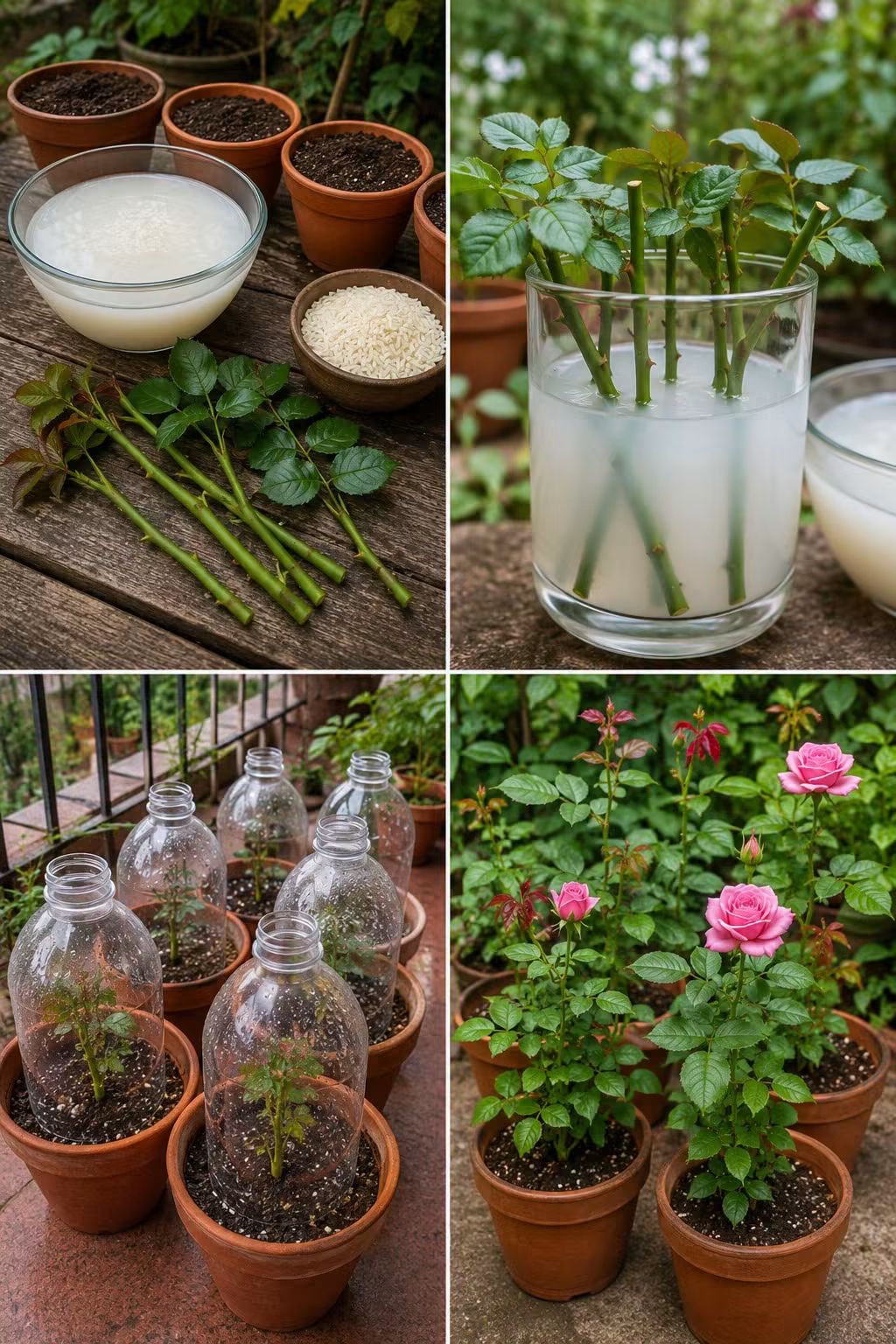
Rose Propagation from Cuttings with Epsom Salt & Humidity Domes
A Proven Method for Rooting Healthy Roses Using Dissolved Epsom Salt Soak and Upcycled Plastic Bottle Greenhouse Covers
This Rose Cuttings Propagation Method combines the magnesium-boosting benefits of dissolved Epsom salt with upcycled plastic bottle humidity domes. Soaking freshly prepped stem cuttings in an Epsom salt solution helps stimulate cell division, reduce transplant shock, and encourage vigorous root node development before planting into pots.
Covering the potted cuttings with cut plastic bottle domes creates a mini-greenhouse environment that retains ambient moisture, preventing delicate stem cuttings from drying out while they develop vibrant new roots and blooms.
I. Botanical Science Behind Epsom Salt & Microclimates
Using magnesium sulfate (Epsom salt) and localized humidity domes drastically improves rooting success for hardwood and semi-hardwood rose cuttings:
- Magnesium Absorption: Epsom salt (Magnesium Sulfate) aids chlorophyll production and boosts cell wall strength, helping stem cuttings retain vitality while rootless.
- Reduced Transpiration: Plastic bottle domes lock in 90%+ humidity, reducing moisture loss from leaves so stems focus energy entirely on root formation.
- Root Zone Warmth: Clear plastic traps ambient light and warmth around the soil surface, accelerating callousing at the cut node.
II. Materials & Preparation Overview
🌱 Propagation Supplies
Required Materials:
- Healthy rose stems (pencil-thick, 6-8 inches long)
- 1-2 tablets (or 1 tbsp) Epsom salt dissolved in 2 cups warm water
- Uncooked rice / organic soak additive (optional starch stimulant)
- Terracotta or plastic nursery pots filled with well-draining soil mix
- Clear 2-liter plastic bottles (cut in half to serve as domes)
- Sharp bypass pruners or razor blade
III. Step-by-Step Propagation Guide
Step 1: Cut and Prep Rose Stems
Select healthy, disease-free rose stems. Cut 6- to 8-inch sections using clean pruners at a 45-degree angle right below a leaf node. Strip off the lower leaves, leaving only 2 to 4 leaves at the very top of each stem to minimize water loss.
Step 2: Epsom Salt Solution Soak
Dissolve the Epsom salt tablets completely in water until cloudy white. Place the bottom cut ends of the rose stems into the glass container containing the dissolved Epsom salt solution. Allow the cuttings to soak for 30 to 60 minutes to absorb magnesium and hydration.
Step 3: Plant into Potting Medium
Make a pilot hole in the pre-moistened soil inside terracotta pots using a pencil. Insert the soaked stem cutting 2 to 3 inches deep into the soil and firm the potting mix gently around the base to eliminate air pockets.
Step 4: Place Plastic Bottle Humidity Domes
Cover each planted stem with the top half of a cut plastic bottle, pressing the bottom edge slightly into the soil. Keep the bottle cap off for subtle airflow. Place the pots in bright, indirect sunlight and keep the soil consistently moist until new leaf growth appears in 3 to 4 weeks.
💡 Gardener’s Pro Tip:
Once you see new green shoots bursting through the leaf nodes, slowly acclimate the young rose plant by removing the plastic dome for 1-2 hours a day before removing it completely!
IV. Summary & Quick Reference Matrix
This simple, cost-effective rooting strategy yields healthy, self-rooted rose bushes ready for garden transplanting in just a few short weeks.
🌹 Propagation Highlights & Quick Reference
| Key Step | Technique / Purpose | Pro Gardening Tip |
|---|---|---|
| 1. Stem Selection | Use semi-hardwood stems that bend slightly without snapping for ideal root-initiating hormones. | Take cuttings in early morning when stems are fully hydrated. |
| 2. Epsom Salt Soak | Dissolved magnesium sulfate strengthens plant tissue and reduces shock during rooting phase. | Do not over-concentrate salt; 1 tbsp per liter of water is the maximum ideal dosage. |
| 3. Dome Microclimate | Cut plastic bottles create a self-contained greenhouse that traps moisture around leaves. | Remove bottle caps to prevent excessive heat buildup on sunny days. |