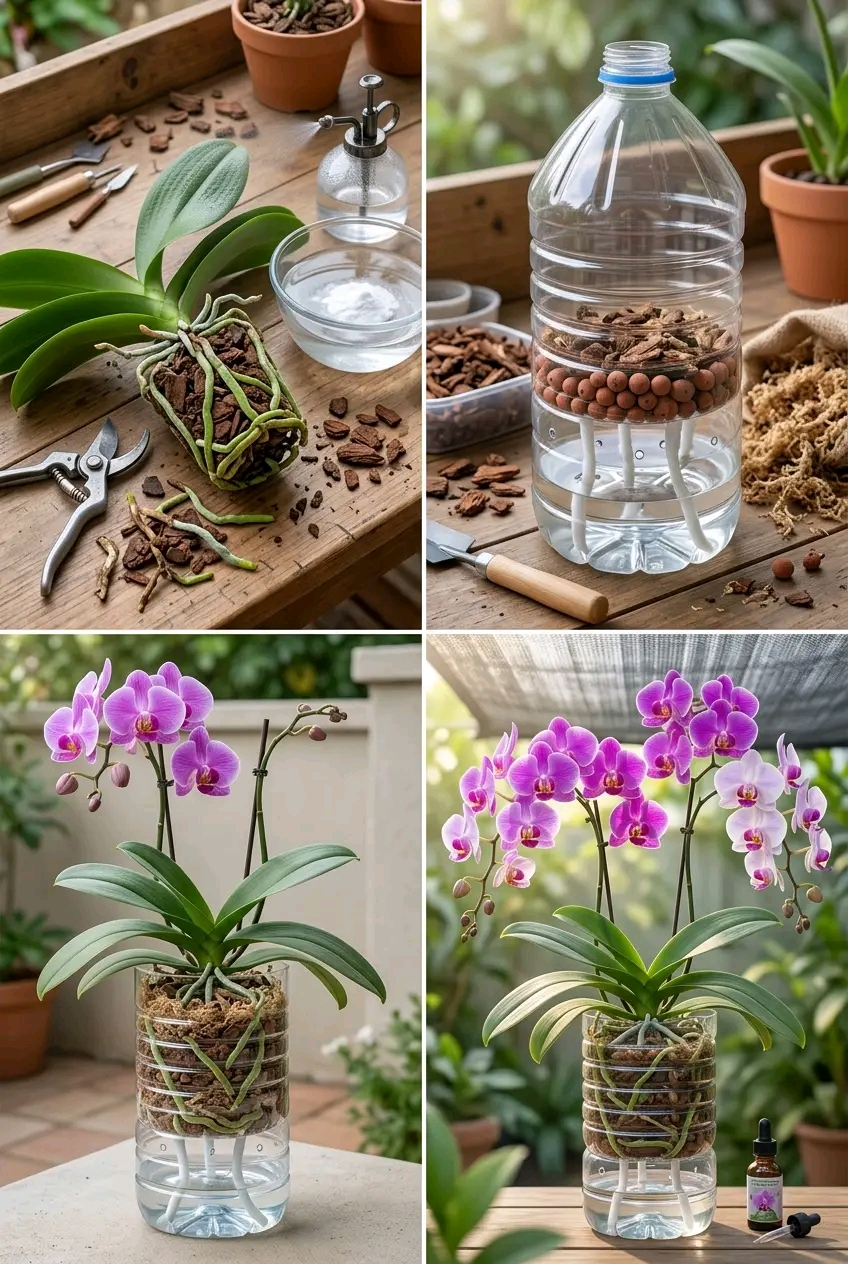
The Moth Orchid (Phalaenopsis) is widely celebrated for its elegant, long-lasting flowers, arching blooms, and vibrant tropical grace 🏠🌸. Adding a sophisticated touch to homes and indoor spaces, this stunning indoor plant is a favorite among plant lovers and indoor gardeners 🌿✨.
However, many orchid parents face a common struggle: a once-vivid orchid that suddenly loses its root system due to overwatering, compact growing media, or fungal root rot 🥀. Because epiphytic orchids rely heavily on air-exposed roots for hydration, losing primary roots causes severe dehydration, limp leaves, and a failure to set new flower spikes 🧪⚠️.
Fortunately, brilliant DIY self-watering systems—crafted using recycled plastic bottles, cotton wicks, expanded clay pebbles (LECA), fine pine bark, and sphagnum moss—provide continuous humidity and hydration to revive struggling orchids without drowning delicate root crowns 🪵💧🌾🛡️!
In this master blog guide, we will explore the botanical science behind semi-hydroponic orchid recovery, compare propagation media, detail step-by-step assembly instructions, and share essential long-term care rules for non-stop blooming 📝👇🛡️!
🌸 The Botanical Science Behind Orchid Root Regeneration & Hydration 🧪✨
In their native habitats, orchids grow attached to tree bark, absorbing moisture from humid rainforest air and passing rain showers 🔬🧬. When root systems collapse in traditional pots, the plant requires high ambient humidity around the base to stimulate new adventitious aerial roots.
Core Factors for Semi-Hydroponic Recovery & Root Growth:
- Capillary Action (Cotton Wicks) 🧵: Cotton wicks draw water upward from a reservoir to the substrate layer, maintaining steady moisture without saturating the plant base.
- Hydroton Clay Pebbles (LECA) 🪨: Highly porous clay balls absorb water while creating large air pockets that supply oxygen directly to emerging root tips.
- Baking Soda Root Sanitization 🧼: Mild baking soda rinses help neutralize surface fungal spores and clean damaged root zones before repotting.
- Controlled Reservoir Humidification 💧: Water evaporating from the lower bottle chamber creates a micro-greenhouse effect that signals the central stem to push out new green roots.
📊 Comprehensive Comparison: Orchid Substrate & Recovery Components
To help you build the ideal self-watering system for reviving rootless orchids, compare these core media materials side-by-side 📋👇:
| Recovery Component 🛡️ | Primary Function 🎯 | Core Benefit for Orchids ✨ | Maintenance Level 🗓️ |
|---|---|---|---|
| Recycled Plastic Container 🏺 | Substrate housing & reservoir | Maintains constant humidity around root zone 🌸 | Low 🗓️ |
| Cotton Wicks 🧵 | Capillary water transport | Delivers automated, steady hydration 💧 | Replace every 6 months ⏱️ |
| LECA Clay Pebbles 🪨 | Drainage & bottom aeration | Prevents root drowning & stores moisture 🌿 | Long-lasting 🗓️ |
| Chunky Pine Bark & Moss 🪵 | Upper stem support | Mimics tree bark environment & holds ambient moisture 💚 | Replace |
🛡️ Key Benefits of Self-Watering Plastic Bottle Reservoirs 🌸✨
1. Triggers Rapid New Root & Aerial Shoot Growth 🌸✨
Maintaining high ambient moisture without touching the stem crown encourages dormant root primordia along the main axis to push out firm, green root tips!
2. Eliminates Overwatering & Root Decay Risks 🌿🛡️
The physical separation between the water reservoir below and the potting substrate above ensures roots never sit directly in stagnant water.
3. Provides Automated, Low-Maintenance Moisture 💧✨
The capillary wick system automatically feeds water as needed, allowing you to go weeks without worrying about manual watering schedules!
4. Reuses Household Plastic Containers Safely 🏠🪙
Repurposing plastic water bottles into mini-hydroponic pots is an eco-friendly, budget-friendly technique for saving damaged indoor plants.
📝 Step-by-Step Instructions: Building a Self-Watering Orchid Reservoir ✂️💧
Pro-Tip: Always clean away soft, hollow, or rotted root strands using sterilized pruners before setting up your recovery pot!
Step 1: Trim & Sanitize Root Base ✂️🧼
Carefully strip away decayed or black root tissue. Rinse the healthy stem base with a mild baking soda water solution (1\text{ tsp per liter}) to sanitize cut surfaces.
Step 2: Prepare Plastic Bottle Pot 🏺✂️
Cut a clean 2\text{-liter} plastic bottle into two halves. Punch small aeration holes around the top inverted section and thread 2\text{ to }3 cotton wicks through the bottle neck.
Step 3: Layer LECA Pebbles & Wicks 🪨🧵
Invert the top half into the bottom reservoir base. Fill the lower portion of the inverted funnel with pre-soaked expanded clay pebbles (LECA), extending the cotton wicks through the pebble layer.
Step 4: Add Bark, Moss & Secure Plant 🪵🌸
Place a layer of chunky pine bark and sphagnum moss over the clay pebbles. Position the orchid stem gently on top, securing it so the crown stays above the moist zone.
Step 5: Fill Reservoir & Monitor 💧🏠
Pour clean filtered water into the bottom reservoir, ensuring the water level touches the cotton wicks but remains below the inverted bottle neck.
🗓️ Essential Rules for Long-Term Orchid Blooming Success 💡🛡️
Pairing your semi-hydroponic setup with proper environmental care guarantees continuous floral spikes 🌟:
- Provide Bright, Indirect Light ☀️: Place setup near an east- or south-facing window behind sheer curtains. Good light triggers energy production for new leaves and flower spikes!
- Maintain Warm Temperatures 🌡️: Orchids recover fastest in warm ambient room temperatures (20\text{–}26^\circ\text{C}). Keep away from cold window drafts!
- Refresh Reservoir Water Bi-Weekly 💧: Drain and refill the lower reservoir with fresh filtered water every 2 weeks to prevent mineral accumulation.
- Apply Diluted Liquid Fertilizer 🌸: Once new roots reach 2\text{ inches} long, add balanced orchid fertilizer diluted to 1/4 strength to the water reservoir monthly.
🌟 Final Thoughts
Saving a rootless Phalaenopsis Orchid and transforming it into a flourishing, bloom-filled centerpiece is completely achievable with semi-hydroponic bottle systems 🌸🌿✨. By utilizing simple materials like recycled plastic containers, cotton wicks, clay pebbles, and pine bark, you provide the perfect humid environment for new roots to thrive 🏠🛡️. Give your damaged orchids a fresh start today and enjoy stunning tropical blossoms year-round! 🚀🌸💜